2026 Best Ways to Test Pipe Strength and Quality Guide?

Time:2026-05-22 Author:Sienna
0%

In the ever-evolving pipeline industry, understanding how to test pipe strength and quality is paramount. As infrastructure needs grow, the demand for reliable pipes increases. According to a recent report by the American Society of Civil Engineers (ASCE), nearly 500,000 miles of pipeline need urgent upgrades to ensure safety and performance. This statistic emphasizes the importance of reliable testing procedures.

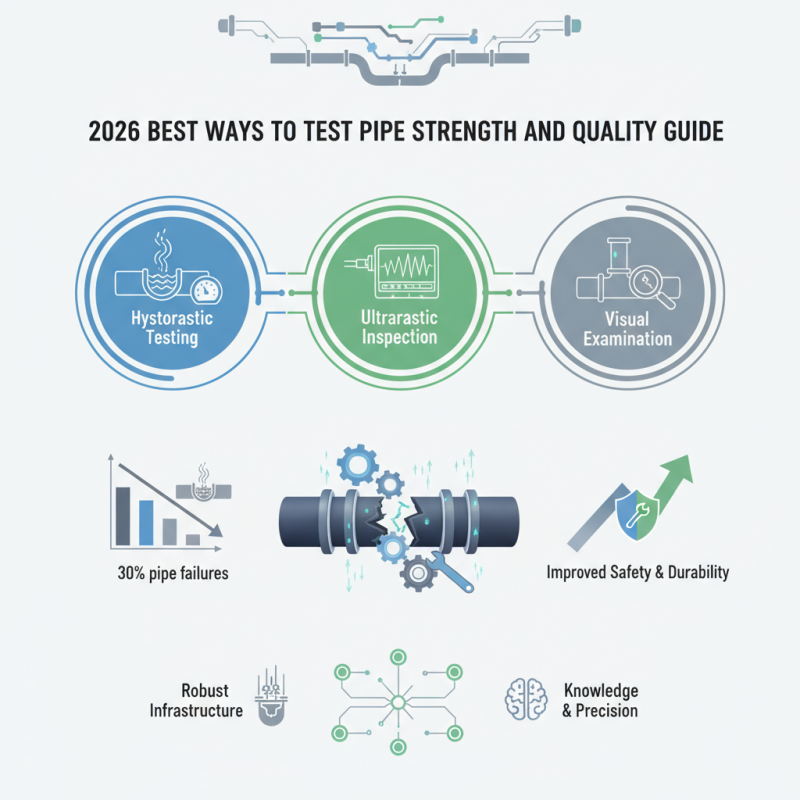
Experts in the field, such as Dr. Emily Zhao, a renowned materials engineer, emphasize, “Effective testing methods are crucial for ensuring both durability and safety in pipelines.” Methods like hydrostatic testing, ultrasonic inspection, and visual examination play vital roles in assessing the quality and strength of pipes. Each method offers unique insights, but they also come with limitations.

Recent studies show that nearly 30% of pipes fail within their intended lifespan due to inadequate testing and assessment. Therefore, industry professionals need clarity in how to test pipe strength and quality, ensuring that the infrastructure we rely on remains robust and secure. The importance of precise testing can never be overstated; it's fundamental for public safety and resource management.
2026 Best Ways to Test Pipe Strength and Quality Guide?

Understanding Pipe Strength: Key Concepts and Definitions

Understanding pipe strength is essential for assessing product quality. Pipe strength refers to a material's ability to withstand pressure and stress without failure. This concept is crucial in various industries, including construction and manufacturing. A pipe that can endure high pressure is vital for maintaining system integrity.

Key definitions associated with pipe strength include yield strength and tensile strength. Yield strength indicates when a material begins to deform, while tensile strength measures its maximum stress before breaking. Testing these parameters is critical. However, different testing methods can yield varied results, leading to potential confusion. Some methods may not fully capture a pipe's performance under real-life conditions.

Reflecting on these concepts, it becomes clear that knowledge in this area is both valuable and necessary. Understanding how factors like temperature and corrosion can affect pipe strength is essential for professionals. It is important to consider the limitations of existing testing methods. This awareness can drive improvements and innovations in quality testing practices.

Methods for Testing Pipe Strength: An Overview of Techniques

Testing the strength and quality of pipes is crucial in various industries. Different methods are used to assess the durability and integrity of these essential components. One common technique is the hydraulic test. This method involves filling the pipe with water and applying pressure. It helps detect leaks and weaknesses. However, it requires careful monitoring to avoid accidents.

Another effective method is the tensile strength test. This evaluates the maximum amount of tensile stress a pipe can withstand before failure. Samples are pulled until they break. This technique is straightforward yet can be time-consuming. There are instances where results can be misleading due to the flaws in the sample preparation.

Ultrasonic testing is also popular. It uses high-frequency sound waves to identify internal defects. This method is non-destructive, which is beneficial. Still, it demands skilled technicians to interpret the data accurately. Sometimes, the readings may vary slightly, leading to uncertainty. Balancing various testing methods can provide a more comprehensive view of a pipe's strength and quality. Each technique has its own advantages and limitations, emphasizing the need for careful consideration in testing strategies.

Evaluating Material Quality: Standards and Specifications

When evaluating the quality of pipes, adherence to industry standards is crucial. Organizations like ASTM International provide guidelines that ensure consistent material quality. For instance, ASTM A53 outlines the specifications for pipe strength in various applications. This leads to a more reliable product in industries ranging from construction to petroleum.

Testing methods also play a vital role in assessing pipe quality. Techniques such as ultrasonic testing and tensile strength testing yield important data. According to a report by the American Society of Mechanical Engineers (ASME), 20% of pipe failures are linked to inadequate testing. Hence, implementing rigorous quality assessments is necessary.

However, challenges still exist in the testing process. Not all facilities have access to advanced testing technologies. This can lead to inconsistent results. It's essential to reflect on these gaps and continuously improve testing protocols to meet quality standards effectively.

Factors Affecting Pipe Strength and Quality During Manufacturing

When assessing the strength and quality of pipes, several manufacturing factors play a critical role. Material selection is paramount. Steel pipes, for instance, exhibit varying tensile strengths based on the alloy composition. A report from the American Society for Testing and Materials (ASTM) indicates that high-carbon steel can achieve tensile strengths exceeding 1,000 MPa. This variability requires careful consideration during design.

The manufacturing process also significantly impacts pipe integrity. Welding methods, heat treatment, and even the cooling phase can lead to microstructural changes. A study published in the Journal of Pipeline Engineering highlighted that improper cooling could introduce residual stresses, which may reduce long-term performance under load. Additionally, defects like inclusions or voids can compromise strength, emphasizing the need for rigorous inspection protocols.

Quality control during the production stage is non-negotiable. Techniques such as ultrasonic testing and radiography are critical for detecting hidden flaws. The industry standard suggests that at least 90% of pipes should be thoroughly tested before shipment. Nevertheless, achieving perfection remains a challenge. Many manufacturers still report that understanding root causes of failures is an area needing improvement. Continuous learning from past inconsistencies can ultimately enhance the quality of pipe products.

Pipe Strength and Quality Testing Methods

Interpreting Test Results: What They Mean for Pipe Performance

When testing pipe strength and quality, understanding test results is crucial. Each result reveals insights into how a pipe will perform under pressure. For instance, tensile strength tests show how much force a pipe can withstand before breaking. A high tensile strength indicates durability, while lower values may signal potential weaknesses.

Interpreting results isn't always straightforward. For example, a pipe with good pressure resistance may still fail in extreme conditions. It’s essential to analyze environmental factors, such as temperature and corrosive elements. These variables can dramatically affect a pipe's long-term performance. Even slight variations in alloy composition can lead to different outcomes during testing. This complexity highlights the need for experienced professionals to evaluate data accurately.

Moreover, testing often involves limitations. Not all materials are tested under identical conditions. Variability in results can arise from measurement errors or discrepancies in test methods. Recognizing these potential pitfalls can lead to better decision-making. Understanding the nuances of each test will empower manufacturers and engineers to select the best pipes for their specific applications. The ultimate goal is safe and reliable performance in diverse scenarios.

FAQS

: Why is industry standard adherence important in pipe evaluation?

: Industry standards ensure consistent material quality, leading to reliable products across various applications.

What are common testing methods for pipe quality?

Ultrasonic testing and tensile strength testing are common methods used to evaluate pipe quality.

What percentage of pipe failures are due to inadequate testing?

According to reports, 20% of pipe failures arise from poor testing practices.

What factors can affect a pipe's long-term performance?

Environmental factors, like temperature and corrosive elements, significantly impact a pipe's durability.

Why is interpreting test results complex?

Results can vary under different conditions, making analysis challenging and requiring experienced professionals.

Can a pipe with good pressure resistance still fail?

Yes, good pressure resistance doesn't guarantee performance under extreme conditions.

What issues arise from testing limitations?

Variability in results can occur due to measurement errors and discrepancies in testing methods.

How does alloy composition impact testing outcomes?

Slight changes in alloy composition can lead to significantly different test results.

Why is continuous improvement in testing protocols necessary?

Improvements help address gaps in access to technologies, leading to better quality assessments.

What is the ultimate goal of pipe material evaluation?

The goal is to ensure safe and reliable performance in a variety of scenarios.

Conclusion

This article titled "2026 Best Ways to Test Pipe Strength and Quality Guide" provides a comprehensive overview of how to test pipe strength and quality effectively. It begins with key concepts and definitions that lay the groundwork for understanding pipe strength. The methods for testing are explored in detail, offering an overview of various techniques used in the industry.

Additionally, the article discusses the importance of evaluating material quality by outlining relevant standards and specifications. Factors affecting pipe strength and quality during manufacturing are also highlighted, emphasizing how these elements can influence performance. Finally, it addresses how to interpret test results, providing insights on what they mean for pipe performance in practical applications. This guide serves as an essential resource for those seeking to ensure the reliability and durability of piping systems.

Sienna

Sienna

Sienna is a skilled marketing professional with a deep expertise in our company’s core products and services. With a passion for innovation and detail, she plays a pivotal role in crafting insightful blog posts that not only highlight the unique features of our offerings but also provide valuable......