China’s pipe manufacturing sector is evolving as global buyers seek reliable products, clearer quality records, and more predictable delivery. So, what are the latest trends in pipe manufacturing? Automation is improving consistency in processes such as cutting, welding, and dimensional inspection. Digital production records can help buyers trace a pipe from its material batch to its final test report. These tools are useful, but their value depends on accurate data and sound quality controls.
Manufacturers are also exploring energy-efficient production, improved corrosion-resistant coatings, and materials selected for specific operating conditions. For buyers, the practical question is not simply which technology is newest. It is whether a supplier can show how that technology affects performance, cost, and lead time. A mill visit, sample inspection, and review of test documentation can reveal details that a brochure may miss. Small details matter.
This guide examines developments shaping China’s pipe industry and explains what international buyers can assess when comparing suppliers. Product standards, inspection requirements, and documentation needs vary by destination and application, so buyers should confirm them for each project. Not every factory has adopted the same systems, and a newer production line does not guarantee better results. That deserves a second look. Careful sourcing still depends on clear specifications, independent verification where appropriate, and direct communication with the manufacturer.
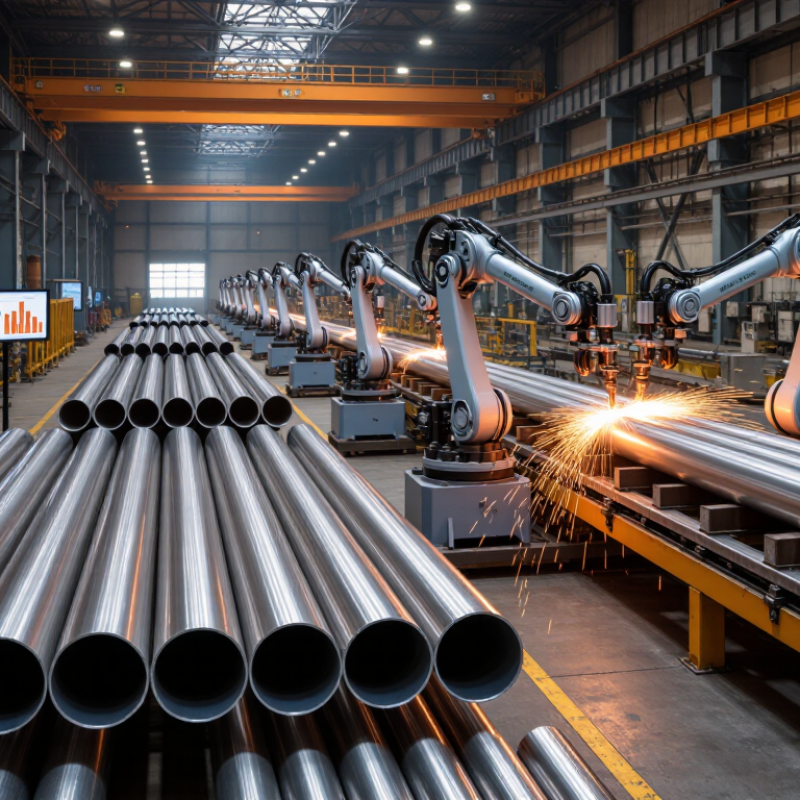
China’s pipe manufacturing industry covers a broad range of products, from welded and seamless steel pipes to stainless-steel and alloy options. These products serve construction, water systems, energy projects, machinery, and industrial facilities. The range is wide. Pipe dimensions, wall thickness, material grades, and production methods vary by application, so buyers should define requirements before comparing suppliers.
Manufacturing scope also includes cutting, forming, welding, heat treatment, surface finishing, and inspection. A practical review might check whether a pipe’s measured wall thickness matches its specification, and whether weld seams receive suitable inspection. Mill test certificates and traceability records help buyers verify material details. Yet paperwork alone is not enough; sample checks and clear acceptance criteria can reveal gaps.
Some producers handle both standard orders and customized dimensions, but capacity may differ by product line. A catalogue can suggest a wider range than a factory can deliver on schedule. Details matter. Buyers should confirm production capacity, lead times, packaging, and export handling for the exact grade and size required. Moisture protection during transport, for example, can affect pipe condition on arrival. Even experienced teams can overlook small specification differences, so review is worth repeating.
Pipe selection starts with the job: pressure, temperature, fluid chemistry, soil conditions, and installation method. Carbon steel is common in oil, gas, and industrial service, while stainless steel suits corrosive environments where its higher cost is justified. Ductile iron is widely used for water networks because it combines strength with toughness. Plastic options include PVC, HDPE, and polypropylene; they are light to handle and resist many forms of corrosion. Concrete pipe remains useful for large-diameter drainage and wastewater systems.
Fit matters.
Material supply figures offer context, but they do not equal pipe-market shares. World Steel Association’s World Steel in Figures 2024 reports 1,892.2 million tonnes of crude steel production in 2023. That is not pipe output, yet it shows the scale of the steel supply base. PlasticsEurope’s Plastics the Fast Facts 2023 reports 400.3 million tonnes of global plastics production in 2022, across all applications—not just pipes. Buyers should compare grades, wall thickness, pressure ratings, joint systems, and test documentation, rather than choosing by material name alone.
A practical caveat: published figures rarely show how much material meets a particular project’s specification.
Check the details.
China’s scale matters to buyers, but output alone does not prove pipe quality. World Steel Association’s World Steel in Figures 2024 reports that China produced 1,019.1 million tonnes of crude steel in 2023, from 1,892.2 million tonnes worldwide. These figures describe crude steel, not finished pipe. That distinction is important. Pipe makers may form steel through seamless piercing and rolling, or weld formed strip using electric resistance or submerged arc processes. The right route depends on diameter, wall thickness, steel grade, and intended service.
Quality checks should follow the product specification, not a generic checklist. For pipeline applications, ISO 3183 and API Specification 5L define requirements such as dimensions, mechanical properties, and testing. Buyers commonly review chemical analysis, tensile results, weld inspection, and hydrostatic or nondestructive test records. Ask for heat-number traceability linking each pipe to its material and inspection documents. Check sample reports against the order’s grade and dimensions.
A clean certificate is useful, but it is not the whole story. Request evidence of calibration, inspection frequency, and how rejected pipes are handled. Small details matter: a marked pipe end, a readable test record, and consistent wall-thickness readings. Site audits can reveal gaps that paperwork misses. They also take time and may not represent every production shift. There is no perfect shortcut.
Emerging trends in Chinese pipe production include tighter process control, automated inspection, and lower-carbon steel inputs. On modern lines, laser measurement and ultrasonic testing can identify wall-thickness variation before pipes reach coating or hydrotesting. Mills are also linking production records with heat numbers, dimensions, and test results. This helps buyers audit batches instead of relying only on certificates. Yet digital records vary in depth; traceability can still stop at the mill gate.
The scale matters. World Steel Association’s World Steel in Figures 2024 reports that China produced 1,019.1 million tonnes of crude steel in 2023. The IEA’s Iron and Steel Technology Roadmap (2020) estimates that iron and steel production contributes about 7% of global energy-system CO2 emissions. That pressure is driving interest in scrap-rich steel charges, energy-efficiency upgrades, and cleaner electricity. Changes involve furnaces, coating lines, and wastewater treatment—not just the steel recipe. Progress is uneven. Buyers should check mill test data, grade consistency, and whether emissions claims clearly state their boundaries. Claims without boundaries are hard to compare.
| Trend | Relevant Data or Measurable Indicator | What Global Buyers Should Check | Basis or Verification Method |
|---|---|---|---|
| Capacity planning and market cycles | China produced 1,005.1 million metric tonnes of crude steel in 2024, compared with 1,019.1 million tonnes in 2023 (approximately 1.4% lower). Crude-steel output is an industry-scale indicator, not a measure of pipe production. | Confirm the mill’s available capacity for the specific pipe type, grade, dimensions, and delivery window. Request a production schedule rather than using national steel output as a proxy for order availability. | World Steel Association, 2024 crude-steel production statistics; verify order-specific capacity directly with the supplier. |
| Closer alignment with project specifications | Key order variables include manufacturing route, grade, outside diameter, wall thickness, length, dimensional tolerances, and the governing product standard. | State the required standard and edition in the purchase specification. Check that the offered pipe type and manufacturing route meet the intended service and design requirements. | Compare the purchase specification with the applicable standard and the supplier’s inspection and test documentation. |
| More rigorous quality documentation | Order-level records can include heat or batch identification, chemical composition, tensile properties, dimensional inspection, and required non-destructive testing results. | Require material test certificates and confirm that heat or batch numbers on the pipe, certificates, and inspection records are traceable to the same production lot. | Review original inspection records and define witness, hold-point, sampling, and acceptance requirements before production. |
| Service-specific corrosion protection | Coating and lining requirements depend on the service environment. Relevant checks may include coating type, thickness, adhesion, surface preparation, and holiday-test results where specified. | Specify the coating or lining system, test method, acceptance criteria, and repair procedure. Confirm whether protection is required for internal surfaces, external surfaces, or both. | Use the project coating specification and applicable test standards; review inspection reports for the delivered lot. |
| Digital and lot-level traceability | A practical traceability record links pipe markings to the production lot, material certificate, inspection results, and shipment documents. | Agree on marking format and document delivery before shipment. Check that records remain readable and accessible throughout receiving, installation, and later maintenance. | Verify sample records during supplier qualification and conduct document-to-product checks during inspection. |
| Low-carbon procurement and emissions disclosure | A comparable product-carbon figure should identify the reporting boundary, unit (for example, kg CO2e per tonne of product), calculation method, and verification status. | Request product-specific emissions information where relevant. Compare figures only when boundaries, included processes, and verification methods are consistent; do not treat a national steel-output figure as a product footprint. | Review the supplier’s environmental declaration or carbon-footprint report and its stated methodology and verification evidence. |
| Delivery and export-readiness planning | Order-specific indicators include confirmed production lead time, inspection dates, packing method, shipment quantity, port of loading, and agreed delivery terms. | Obtain a dated production and shipping schedule. Confirm export packaging, corrosion protection in transit, document requirements, and responsibility for inspection and freight under the agreed delivery terms. | Validate against the purchase contract, inspection plan, packing list, and shipping documents. |
Global buyers should evaluate pipe suppliers through evidence that connects factory controls with field performance. The World Steel Association’s October 2024 Short Range Outlook forecast steel demand at 1.75 billion tonnes in 2024, down 1.2 percent, before a projected 1.2 percent rise in 2025. These shifts can affect material availability, lead times, and pricing. Ask suppliers to identify steel grades, heat numbers, and test results on sample documents. Then trace one finished pipe back to its mill certificate. Small details matter.
A supplier scorecard should cover dimensional tolerances, coating checks, non-destructive testing, production capacity, and corrective-action records. Request recent inspection reports, not just certificates. The World Bank’s 2023 Logistics Performance Index assessed 139 economies across six logistics dimensions, including customs and timeliness. That is a reminder to check the route, too: confirm port options, shipment milestones, and how delays are communicated. Paper is not proof. Remote audits also have limits; a polished video cannot show whether inspection routines hold during a busy production shift. Some buyers focus too heavily on unit price. That is an easy mistake. A clearer risk plan links each order to inspection points, document checks, and a named escalation contact.
Example supplier evaluation framework for global pipe sourcing
How to read this: The scores are illustrative, not survey results or market statistics. They show how buyers might prioritize quality, compliance, delivery, landed cost, capacity, and sourcing resilience when comparing pipe suppliers. Actual weightings vary by project, pipe specification, and destination-market requirements.
It covers welded and seamless steel pipes, stainless-steel and alloy pipes, plus other materials. Products serve construction, water systems, energy, machinery, and industrial facilities.
Define the required material, grade, diameter, wall thickness, and production method. Then check capacity and lead time for that exact specification. Details matter.
Compare measured wall thickness with the specification and review suitable weld inspections. Check test certificates and traceability records, then inspect samples where practical. Paperwork alone is not enough.
Carbon steel is common in industrial service. Stainless steel can suit corrosive environments, while ductile iron is used in water networks. Plastic and concrete pipes also serve specific conditions. Fit matters.
Consider pressure, temperature, fluid chemistry, soil conditions, and installation method. Compare pressure ratings, wall thickness, grades, and joint systems—not just the material name.
Not by itself. Ask about the exact size and grade, production capacity, packaging, export handling, and schedule. A broad catalogue can be misleading.
Laser measurement can detect wall-thickness variation, while ultrasonic testing checks pipe quality. Digital production records may connect heat numbers, dimensions, and test results. Traceability can still stop at the mill gate.
Ask which production stages and emissions are included. Scrap use, efficient equipment, and cleaner electricity may help, but claims without clear boundaries are hard to compare. We may still miss something.
China’s pipe manufacturing industry serves a wide range of infrastructure, construction, energy, and industrial applications. Buyers can choose from products made of carbon steel, stainless steel, ductile iron, copper, plastics, and other materials, with specifications tailored to different operating conditions. Production may involve processes such as casting, extrusion, forming, welding, heat treatment, and surface finishing. Consistent inspection and recognized quality standards help ensure that pipes meet requirements for dimensions, strength, durability, and performance.
For global buyers asking what are the latest trends in pipe manufacturing, key developments include greater automation, more efficient production, improved material performance, and increased attention to sustainability and traceability. Evaluating suppliers requires more than comparing prices: buyers should review manufacturing capabilities, quality-control procedures, testing records, delivery capacity, and communication practices. Clear specifications, sample evaluations, and ongoing supplier monitoring can help reduce sourcing risks and support reliable long-term procurement.

Flowtera Pipe