China Best Duplex vs Super Duplex Steel Difference?

Time:2026-11-14 Author:Ethan
0%

Duplex stainless steel combines austenite and ferrite in a balanced microstructure, giving it useful strength and corrosion resistance. Super duplex steels build on that design, usually with higher chromium, molybdenum, and nitrogen. These alloying elements can improve resistance to pitting and crevice corrosion, especially in chloride-rich environments. The difference matters. But the label alone does not guarantee performance. Grade, heat treatment, product form, and service conditions all influence results.

For buyers comparing Chinese suppliers, the practical question is “what is the difference between duplex and super duplex steel” for the intended application? Common examples include duplex grades such as UNS S32205 and super duplex grades such as UNS S32750, but specifications should be checked rather than assumed. A higher alloy content may offer an advantage in seawater piping or chemical equipment, yet it can also raise material and fabrication costs. Not always. Welding quality and phase balance deserve close attention too. A certificate is useful, but it is not the whole picture; confirm grade, heat number traceability, testing requirements, and applicable standards with the supplier. One point is easy to oversimplify: “super” does not automatically mean the better choice. This guide compares composition, corrosion behavior, strength, fabrication, and cost, while noting where project conditions can change the answer.
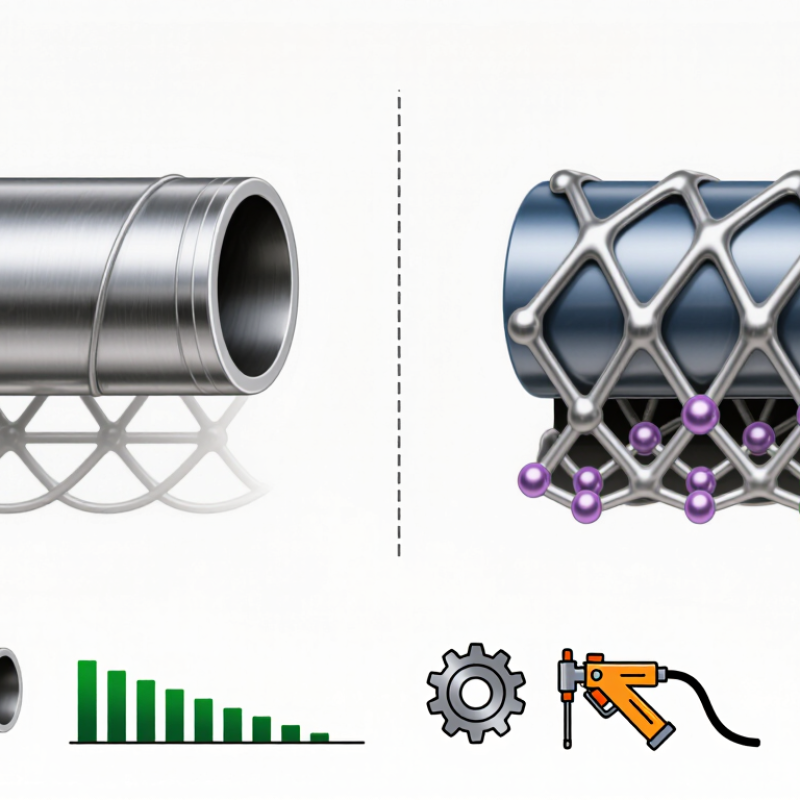
China Best Duplex vs Super Duplex Steel Difference?

What Are Duplex and Super Duplex Stainless Steels?

Duplex stainless steels contain both ferrite and austenite in their microstructure. This balanced structure can provide higher strength than many conventional austenitic grades, along with useful resistance to chloride stress corrosion cracking. Common uses include process piping, storage tanks, and equipment exposed to coastal conditions. Performance still depends on the exact grade and service environment.

Tips: Check chloride levels, temperature, and weld requirements before choosing a grade. Compare corrosion data as well as strength. A detail worth checking twice.

Super duplex steels are a more highly alloyed subset of duplex steels, typically with added chromium, molybdenum, and nitrogen. These additions can improve resistance to pitting and crevice corrosion, especially in demanding seawater service. They also generally offer high strength. However, fabrication and welding need careful control, and higher alloy content does not guarantee suitability for every application. The difference is easy to oversimplify; actual operating conditions matter more than the label alone.

China Best Duplex vs Super Duplex Steel Difference? - What Are Duplex and Super Duplex Stainless Steels?
Comparison Dimension Duplex Stainless Steel Super Duplex Stainless Steel
Typical example UNS S32205 (commonly called 2205) UNS S32750 (commonly called 2507)
Microstructure A two-phase structure of ferrite and austenite, generally balanced in properly processed material. Also a ferrite-austenite two-phase structure; composition and processing are designed for higher corrosion resistance and strength.
Typical alloy composition, wt.% For S32205: chromium 22–23%, nickel 4.5–6.5%, molybdenum 3.0–3.5%, and nitrogen 0.14–0.20%. For S32750: chromium 24–26%, nickel 6–8%, molybdenum 3–5%, and nitrogen 0.24–0.32%.
Pitting resistance (PREN) Typically about 35 or higher for 2205, depending on the exact composition. PREN is an alloy-composition index, not a direct performance guarantee. Typically 40 or higher for 2507, indicating greater potential resistance to chloride pitting and crevice corrosion.
Minimum yield strength at room temperature Approximately 450 MPa (65 ksi) for S32205 plate under ASTM A240 requirements. Approximately 550 MPa (80 ksi) for S32750 plate under ASTM A240 requirements.
Chloride corrosion resistance Good resistance to chloride stress-corrosion cracking, pitting, and crevice corrosion in many applications; performance depends on environment and fabrication. Generally higher resistance to chloride pitting, crevice corrosion, and stress-corrosion cracking than standard duplex grades.
Strength-to-weight benefit Higher yield strength than common austenitic grades such as 304L and 316L can allow more efficient designs where codes permit. Higher minimum yield strength than 2205 can support further design optimization, subject to applicable design rules.
Typical applications Chemical processing equipment, tanks, pressure vessels, pipelines, and structural components exposed to moderately aggressive environments. Seawater piping and handling systems, offshore equipment, desalination components, and chemical-process equipment in more aggressive chloride environments.
Relative cost and availability Often more readily available and less costly than super duplex, though actual pricing depends on product form, market conditions, and specification. Often carries a higher material cost because of its greater alloy content; lifecycle value may be favorable when its added corrosion resistance is required.
Fabrication considerations Requires control of heat input, interpass temperature, and cooling to maintain suitable phase balance and corrosion properties. Also requires closely controlled welding and heat treatment; qualified procedures are especially important for maintaining phase balance and corrosion performance.
Selection guidance Consider when duplex strength and corrosion resistance meet the design requirements and service conditions. Consider when more demanding chloride corrosion resistance or higher strength is required. Confirm suitability against the actual temperature, chemistry, design code, and fabrication method.

Note: Composition ranges and mechanical requirements vary by grade, product form, and specification. Verify the applicable material standard and certified test results for each order.

How Their Chemical Compositions Differ

Duplex and super duplex steels share a two-phase structure, but their alloy chemistry is not the same. ASTM A240/A240M lists 2205 (UNS S32205) with about 22–23% chromium, 3–3.5% molybdenum, and 0.14–0.20% nitrogen. Super duplex 2507 (UNS S32750) has about 24–26% chromium, 3–5% molybdenum, and 0.24–0.32% nitrogen. Its nickel range is also higher: roughly 6–8%, compared with 4.5–6.5% for 2205. Small differences matter.

A common industry screening measure is PREN = %Cr + 3.3(%Mo) + 16(%N). Using midpoint compositions, this gives roughly 36 for 2205 and 43 for 2507. The higher chromium, molybdenum, and nitrogen content generally improves resistance to pitting in chloride environments. Still, PREN is not a service-life guarantee. Weld quality, temperature, surface condition, and actual chemistry can change performance; the number alone is an incomplete guide.

Tip: Check the mill test certificate against the specified grade and standard. For a seawater fitting, verify the design conditions too—not just the alloy name.

How Their Microstructures and Mechanical Properties Compare

Duplex and super duplex stainless steels both contain ferrite and austenite, often in roughly equal proportions. Under a microscope, the two phases appear as interwoven regions rather than a single uniform structure. This balance supports a useful combination of strength and toughness. It can shift, though, with heat treatment, welding, or poor control during fabrication.

Super duplex grades contain more alloying elements, commonly chromium, molybdenum, and nitrogen. These additions improve resistance to pitting and crevice corrosion, especially in chloride-rich environments. They also usually raise yield strength compared with standard duplex grades.

That matters. A thinner section may carry a similar load, but design still depends on temperature, stress, and fabrication details.

The difference is not simply “stronger is better.”

Both families need suitable processing to preserve their phase balance. For example, excessive welding heat can encourage unwanted phases and reduce toughness or corrosion performance.

A polished cross-section can reveal phase distribution, while tensile and corrosion tests help confirm service suitability. Results vary by grade and condition. Even a small mismatch between the intended application and the tested material can complicate a selection.

How Their Corrosion Resistance and Operating Limits Differ

Duplex and super duplex stainless steels both combine austenite and ferrite, but their corrosion margins differ. Standard duplex grades, such as 2205, generally suit many process lines and marine structures. Super duplex grades, such as 2507, contain more chromium, molybdenum, and nitrogen. Their higher pitting resistance helps in warm, chloride-rich seawater. That difference matters.

The extra alloying does not make super duplex immune to corrosion. Stagnant seawater under a gasket, deposits inside a pipe, or poorly finished welds can still trigger crevice attack. Standard duplex may perform well in cooler, cleaner service, while super duplex offers more room when chloride levels or temperatures rise. Not always. Actual performance depends on chemistry, surface condition, and fabrication quality.

Operating limits also need attention. Both families can lose toughness after prolonged exposure to elevated temperatures, and welding can disturb the ferrite-austenite balance. In service reviews, engineers should check the grade’s temperature range, chloride concentration, pressure, and weld procedure together. A higher resistance number is useful, but it is not a design limit by itself. Test data from the actual environment can change the choice.

How to Choose Between Duplex and Super Duplex Steel

China Best Duplex vs Super Duplex Steel Difference?

How to Choose Between Duplex and Super Duplex Steel

Choosing between duplex and super duplex steel means matching corrosion resistance and strength to actual service conditions. For many chloride-bearing process lines, 2205 duplex offers a practical balance. ASTM A240/A240M specifies a minimum yield strength of 450 MPa for 2205, compared with 550 MPa for S32750 super duplex. Higher strength can allow thinner sections, but design calculations must still account for pressure, temperature, fabrication, and applicable codes. More strength is not automatically better.

Corrosion risk matters just as much. The International Molybdenum Association’s Practical Guidelines for the Fabrication of Duplex Stainless Steels describe super duplex grades as having higher alloy content and improved resistance to localized corrosion. Typical PREN values are about 35 for 2205 and above 40 for S32750; actual values depend on product chemistry. In warm seawater or concentrated chlorides, that margin may justify the higher material and fabrication costs. In mild environments, it may not. The neat comparison table can mislead: weld quality, surface condition, and operating temperature also affect performance.

Tips: Check chloride concentration, temperature, and crevice exposure before selecting a grade. Ask the supplier for the material test certificate, then confirm welding procedures suit the chosen alloy. Super duplex needs tighter process control. Don’t choose by PREN alone.

FAQS

What are duplex stainless steels?

They contain ferrite and austenite, two interwoven phases. This structure can provide high strength and resistance to chloride stress corrosion cracking.

How does super duplex differ?

Super duplex grades usually contain more chromium, molybdenum, and nitrogen. These additions can improve resistance to pitting and crevice corrosion.

Where might duplex stainless steel be used?

Common uses include process piping, storage tanks, and equipment exposed to coastal conditions. The environment still matters.

Does super duplex always perform better?

No. Higher alloy content does not guarantee suitability for every service condition. The label can be misleading.

What should be checked before choosing a grade?

Check chloride levels, operating temperature, stress, and welding requirements. Compare corrosion data with strength.

Why does phase balance matter?

A balanced ferrite-austenite structure supports strength and toughness. Heat treatment or fabrication can change that balance.

Can welding affect performance?

Yes. Excessive welding heat may encourage unwanted phases and reduce toughness or corrosion resistance. A small detail, but important.

How can a material’s suitability be confirmed?

A polished cross-section can show phase distribution. Tensile and corrosion tests can help confirm performance for the intended service. Results vary.

Conclusion

Duplex and super duplex stainless steels combine austenite and ferrite in a balanced microstructure, giving them a useful mix of strength and corrosion resistance. The key question, what is the difference between duplex and super duplex steel, is largely answered by their alloy content: super duplex grades generally contain higher levels of chromium, molybdenum, and nitrogen. These additions can improve resistance to pitting and crevice corrosion, especially in chloride-rich environments, while also supporting greater strength.

Both materials can be suitable for demanding applications, but they have different operating limits, costs, and fabrication requirements. Duplex steel may be a practical choice where moderate corrosion resistance and strength are sufficient. Super duplex may be preferred for more aggressive conditions, provided its higher performance is needed and its processing requirements can be met. Comparing the environment, temperature, mechanical demands, and lifecycle needs helps determine the appropriate grade.

Ethan

Ethan

Ethan is a seasoned marketing professional with a deep expertise in our company's innovative product line. With a passion for sharing knowledge and insights, he takes the lead in regularly updating our corporate blog, where he explores industry trends, product features, and effective marketing......