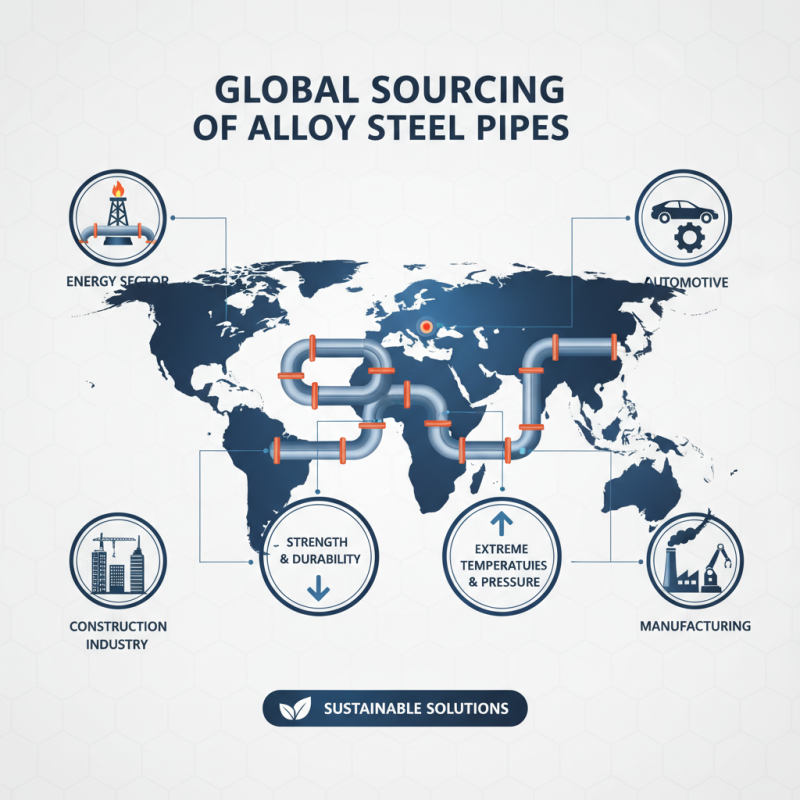
Alloy steel pipes play a crucial role in various industries, enhancing strength and durability in demanding environments. According to industry expert Dr. James Rahn, "The versatility of alloy steel pipes makes them indispensable across multiple sectors." This sentiment highlights the widespread reliance on these pipes for essential operations.
In the energy sector, alloy steel pipes are vital for transporting oil and gas safely. They withstand extreme temperatures and pressure, ensuring reliability in challenging conditions. The construction industry also benefits from these pipes, using them in structural applications and piping systems.
Additionally, industries like automotive and manufacturing rely on alloy steel pipes for their strength and lightweight properties. This demand raises the question: what industries use alloy steel pipes? Understanding the diverse applications is essential for sourcing these materials effectively. As businesses seek sustainable solutions, alloy steel pipes will continue to be a key component across various fields.
Alloy steel pipes play a crucial role in various industries due to their high strength and versatility. In the construction sector, these pipes are used for structural frameworks. Their ability to withstand heavy loads makes them ideal for building frameworks, bridges, and foundations. They can bear stress while maintaining their shape, which is vital in large infrastructure projects.
In the oil and gas industry, alloy steel pipes are indispensable for transporting fluids under high pressure. They resist corrosion and wear, ensuring longevity and safety in harsh environments. These pipes carry oil, gas, and water from one location to another with minimal risk of rupture. This is essential for maintaining efficient operations across drilling and production sites.
The automotive sector also benefits from alloy steel pipes, especially in exhaust systems and fuel lines. These components require materials that can endure high temperatures and pressure. Additionally, the aerospace industry uses alloy steel pipes for hydraulic systems. These applications demand high precision and durability, showcasing the material's reliability. Despite these advantages, challenges such as cost and sourcing can affect production timelines. Addressing these issues is necessary for continued innovation in using alloy steel pipes.
The oil and gas industry heavily relies on alloy steel pipes. These pipes are essential for both transportation and refinement processes. According to the World Steel Association, the oil and gas sector accounts for about 10% of all global steel consumption. Alloy steel pipes are preferred for their strength and corrosion resistance.
Transportation of oil and gas involves high-pressure conditions. Alloy steel pipes can withstand these demands, ensuring safe and efficient movement. A report from MarketsandMarkets shows that the alloy steel pipe market is expected to grow at a CAGR of 5.6% from 2021 to 2026. This growth reflects the increasing exploration and production activities worldwide.
Refinement processes also depend on these pipes. They facilitate the movement of crude oil through various stages. However, challenges persist. Some refinery systems may not be compatible with all alloy grades. Identifying the right materials for specific applications remains a crucial aspect of operational efficiency. An industry survey revealed that 30% of operators faced issues with pipe integrity over time. Addressing these concerns is vital in optimizing performance and ensuring safety.
The construction sector relies heavily on alloy steel pipes for structural and mechanical applications. These pipes are essential for various infrastructures, including bridges, buildings, and pipelines. According to industry reports, the global alloy steel pipe market was valued at approximately $25 billion in 2021 and is projected to grow at a compound annual growth rate of about 6% through 2028.
In construction, alloy steel pipes provide strength and durability. They withstand high pressures and extreme temperatures, making them ideal for critical applications. Data from the American Institute of Steel Construction indicate that using alloy steel can enhance structural integrity by up to 30% compared to other materials. Such statistics highlight the significant role these pipes play in modern engineering.
However, challenges persist with sourcing and production. Fluctuating raw material costs can impact pricing stability. Additionally, adherence to standard specifications and certifications is crucial but often overlooked. This gap can lead to safety issues and project delays. The construction industry must prioritize thorough inspections and quality assurance to mitigate these risks.
| Industry Type | Application | Material Properties | Global Regions |
|---|---|---|---|
| Construction | Structural Frameworks | High Strength, Durability | North America, Europe |
| Oil & Gas | Pipelines | Corrosion Resistance, Toughness | Middle East, Asia-Pacific |
| Manufacturing | Machinery Components | High Pressure Resistance | Europe, North America |
| Automotive | Chassis and Frame | Strength-to-Weight Ratio | Global |
| Construction | Concrete Reinforcement | High Tensile Strength | Australia, South America |
The automotive industry increasingly relies on alloy steel pipes for improved performance and durability. According to a recent report by Allied Market Research, the global automotive steel pipe market is projected to reach $12.5 billion by 2025, growing at a CAGR of 5.4%. This growth highlights the pivotal role that high-strength materials play in enhancing vehicle safety and efficiency.
Alloy steel pipes offer significant advantages due to their superior mechanical properties. They provide excellent resistance to fatigue and corrosion, crucial for components exposed to harsh environments. For instance, in exhaust systems, these pipes withstand extreme temperatures without compromising integrity. A study by the International Journal of Automotive Engineering shows that using alloy steel can extend the operational life of critical components by up to 25%.
However, not all alloy steel options are equally suited for high-performance applications. Engineers must carefully select the right grade and treatment, considering cost and potential performance trade-offs. The complexity of these materials means that continual testing and quality control are essential. Overall, while alloy steel pipes offer numerous benefits, the industry faces challenges in optimizing these materials for diverse applications.
Alloy steel pipes play a crucial role in the marine industry. Their corrosion resistance is vital for applications in harsh marine environments. According to a recent study from the International Maritime Organization, the maritime sector invests over $2 billion annually in corrosion-related maintenance. This highlights the importance of using durable and reliable materials.
The structural integrity of a vessel depends heavily on the pipes used within. The American Bureau of Shipping reports that alloy steel pipes significantly enhance the lifespan of maritime structures, reducing failures and costly repairs. With an increase in offshore activities, the demand for alloy steel pipes has surged by 15% in the last five years, reflecting their essential role in shipbuilding and maintenance.
Tip: When sourcing alloy steel pipes, consider factors like material standards and certifications to ensure quality. Also, don’t overlook the importance of proper maintenance to extend their service life. Many companies find that regular inspections can identify potential weaknesses early, which helps prevent significant issues later.
In the energy sector, alloy steel pipes play a critical role in power generation and distribution. These pipes are designed to withstand high pressures and temperatures. Their durability is essential in environments like power plants and refineries. Using alloy steel ensures the transportation of fluids without leaks or breakdowns. Each joint and seam must be carefully welded to maintain integrity. Any flaw can lead to catastrophic failures, posing risks to both safety and production.
Alloy steel pipes are integral for transporting steam, water, and gases. The specifications for these pipes often vary based on their application. Some are designed for extreme environments, while others are suited for more stable conditions. Not all industries prioritize these variations. Many overlook the implications of using substandard materials, which can increase maintenance costs significantly. A deeper understanding of material properties is essential.
The transition to renewable energy sources also calls for adaptability. As the energy landscape evolves, so do the requirements for materials. Alloy steel pipes must be compatible with new technologies. It’s not just about strength anymore; it’s about smart engineering and sustainability. Companies must reassess their sourcing strategies to ensure safety and compliance with modern demands. Regular audits and assessments can prevent potential pitfalls in an industry that cannot afford failures.
: They offer corrosion resistance, essential for harsh marine environments, ensuring durability and reliability.
The sector invests over $2 billion annually, highlighting the importance of reliable materials.
They enhance the lifespan of maritime structures, reducing failures and expensive repairs.
Demand surged by 15% in the last five years, reflecting their essential role in shipbuilding.
Material standards and certifications are critical for ensuring quality and longevity.
Inspections can reveal potential weaknesses early, preventing significant issues later.
They withstand high pressures and temperatures, essential for transporting steam, water, and gases.
Flaws can lead to catastrophic failures, risking both safety and production efficiency.
They require adaptability, prompting the industry to reassess material compatibility with new technologies.
Regular audits and assessments can prevent costly failures and ensure safety and compliance.
Alloy steel pipes are essential components utilized across various industries due to their unique properties and advantages. In the oil and gas industry, they serve critical roles in the transportation and refinement of resources, ensuring durability and resistance to high pressures. The construction sector benefits from alloy steel pipes for their structural and mechanical applications, providing strength and stability in building projects.
Additionally, the automotive industry relies on these pipes to enhance vehicle performance and longevity, while the marine sector utilizes them for their corrosion resistance and structural integrity in harsh environments. The energy sector also incorporates alloy steel pipes in power generation and distribution solutions, highlighting the diverse applications of these materials. Thus, when considering what industries use alloy steel pipes, it is clear they play a vital role in enhancing operations across multiple sectors.

Flowtera Pipe