Steel pipes look indestructible, but their weight, length, and smooth surfaces create serious handling risks. The World Steel Association reported approximately 1.88 billion tonnes of crude steel production in 2024. That volume reflects a vast logistics network, where small storage errors can multiply quickly. Poorly secured pipes may roll, shift, damage coatings, or crush nearby materials.
Learning how to transport and store steel pipes safely requires more than choosing a strong truck. It requires load planning, verified lifting equipment, stable dunnage, weather protection, and disciplined inspections. OSHA 29 CFR 1910.176 and 1910.184 provide important guidance on material storage and sling safety. The UK Health and Safety Executive’s HSG76, Warehousing and Storage, also emphasizes stable stacking, clear access routes, and controlled vehicle movement.
David Michaels, former Assistant Secretary of Labor for Occupational Safety and Health, stated, “Safety is a value, not a priority.” That distinction matters in pipe yards. Priorities change when schedules tighten. Values should not.
A safer process begins before loading. Confirm each pipe’s weight, length, center of gravity, and surface condition. Use chocks or properly designed racks, not loose timber placed by guesswork. During transport, inspect restraints after the first movement and after sudden braking. At the destination, keep pipes away from unstable slopes, standing water, and pedestrian routes.
Some procedures remain imperfect. Real yards face rain, damaged pallets, rushed deliveries, and incomplete records. This guide addresses those weaknesses directly, while encouraging site-specific risk assessments and qualified professional supervision.
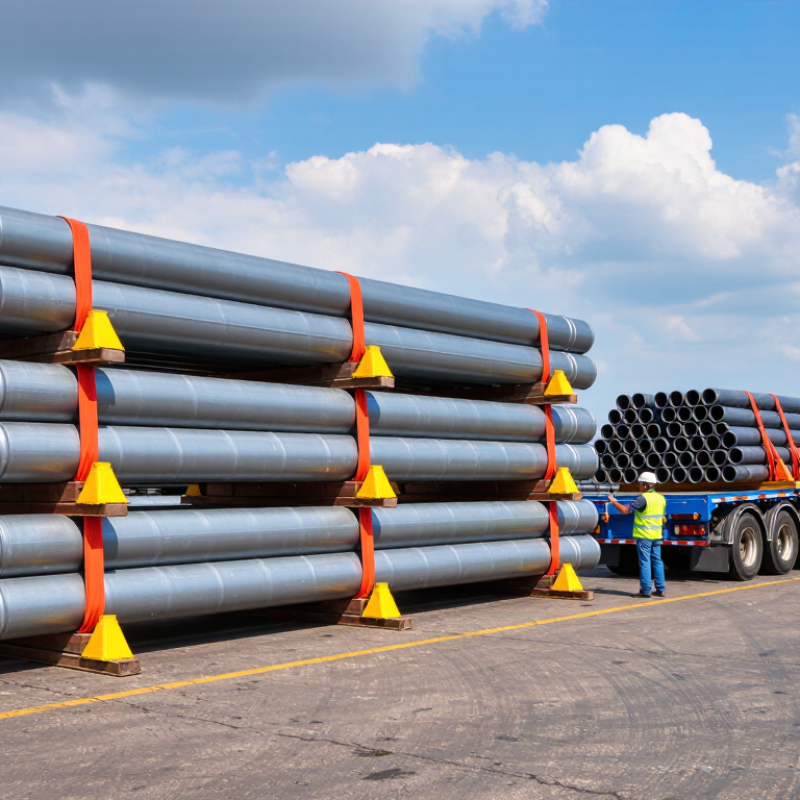
Steel pipes create serious handling risks during loading, transport, and storage. Their weight, round shape, and smooth surfaces can cause rolling, crushing, or sudden movement. The U.S. Bureau of Labor Statistics recorded 1,069 fatal injuries among transportation and material-moving workers in 2023. This figure covers many industries, but it shows why routine handling deserves strict controls.
Use rated slings, chocks, dunnage, and inspected tie-downs. Never rely on friction alone. Pipes should rest on stable supports, with wedges fitted on both sides. During loading, workers must stand outside the pipe’s roll path and suspended-load zone. OSHA identifies struck-by incidents as a major cause of crane-related deaths, with estimates often reaching about 75 percent. A damaged sling may look acceptable. It may not be.
Transport vehicles need balanced loads, protected edges, and tension checked after departure. Recheck restraints after the first movement and at planned stops. Store pipes on firm, level ground, away from drainage channels, traffic, and unstable excavation edges. Separate different diameters when possible. Keep access routes visible and free from loose blocking materials. The hierarchy of controls supports reducing exposure before depending on personal protective equipment, as recommended by NIOSH. Even experienced crews miss small details when production pressure rises. That weakness needs honest review, not blame.
Safe Transport and Storage Insight: Pipe mass increases rapidly with outside diameter and wall thickness. Confirm the actual mass before lifting, select slings and equipment with adequate capacity, secure loads against rolling, and store pipes on stable supports with suitable chocks.
Values are engineering calculations based on steel density of 7,850 kg/m³ and the listed outside diameter and wall thickness. Coatings, fittings, and packaging are excluded.
Preparing steel pipes for secure transport begins before loading. Inspect every bundle for bent ends, sharp burrs, loose coatings, and trapped water. Fit durable end protectors where impact could damage threads or interiors. Remove mud and ice from contact surfaces. Small defects become serious when pipes shift.
Separate pipe layers with hardwood dunnage or rated spacers. Keep supports aligned vertically, not randomly placed. Chocks must prevent rolling in both directions. Use load-rated chains, straps, and edge protection around sharp steel. Tie-down tension should match the cargo weight, vehicle design, and applicable transport rules. The U.S. Federal Motor Carrier Safety Administration requires cargo to remain secured during normal driving forces, including braking and turning.
The U.S. Bureau of Labor Statistics reported 1,495 fatal injuries among transportation and material-moving workers in 2023. That figure reinforces a practical point: loading is a high-risk operation, not routine paperwork. Keep people outside the loading zone. Verify bundle weight against lifting equipment capacity. Record photographs, dimensions, tie-down positions, and inspection times. A rushed checklist is still a failure.
Before departure, walk around the vehicle and check for sagging straps, damaged binders, exposed ends, and unstable stacking. Recheck the load after the first short distance. Pipes can settle. I still allow extra inspection time for wet weather, even when the schedule resists it. That delay is cheaper than correcting a shifted bundle at the roadside.
Safe steel pipe transport begins with equipment that matches the pipe’s weight, diameter, and surface condition. Use rated lifting slings, padded hooks, stable cradles, and forklift attachments designed for round loads. Never rely on ordinary pallets alone. They can roll, split, or shift under concentrated weight. Inspect slings, chains, hooks, and lifting points before every loading operation. Small cuts and bent hardware deserve attention.
Place timber dunnage across the trailer bed to keep pipes clear of standing water and dirt. Add wedges or chocks on both sides of each bundle. Pipes should sit evenly, without unsupported ends hanging over the trailer. Separate layers with strong spacers, leaving enough room for sling placement. Keep heavier bundles below lighter ones. The load should remain within the vehicle’s rated capacity and distribution limits.
Secure bundles with tensioned chains or straps, using edge protection where metal contacts the restraint. Check that restraints cannot slide along the curved surface. During loading, keep workers outside suspended-load zones and use clear hand signals. I have seen experienced crews rush this stage, especially near shift changes. That mistake can create hidden movement. After a short drive, stop in a safe area and recheck tension, chocks, and bundle alignment. A checklist helps, but it cannot replace careful observation.
Steel pipes need support from the moment they leave production. Inspect each bundle for dents, exposed edges, moisture, and loose bands. Separate damaged pipes before loading. A small dent can become a stress point during installation. Use timber dunnage with enough height for forklift access and drainage. Keep pipes away from direct ground contact.
During transport, place restraints over padded contact points. Do not tighten chains against bare steel. Sharp pressure can mark coatings and deform thin-wall sections. Chock round pipes on both sides, then check movement after the first driving period. Loads should remain balanced across the trailer. It sounds basic. It is often missed. Cover pipes against rain, but leave airflow at the sides to prevent trapped condensation. Plastic wrapped too tightly may create a humid pocket.
Storage areas should be level, clean, and free from standing water. Stack pipes by diameter and wall thickness, using aligned supports at regular intervals. Keep heavier sections below lighter ones. Add end caps only when they cannot trap water inside. Check stored bundles weekly, especially after storms or large temperature changes. Look for rust blooms, shifted supports, and broken straps. Early inspection costs minutes.
One practical weakness deserves attention: storage plans often assume perfect handling. Real yards are crowded, and forklifts approach from awkward angles. Mark lifting zones clearly and train operators to avoid dragging pipes across gravel. Record inspections with dates and photographs. If a method repeatedly causes coating damage, change it rather than blaming handling alone.
Inspecting begins before unloading. Check pipe ends, coatings, weld seams, and lifting points for dents, cracks, moisture, or loose debris. Record heat numbers, dimensions, and visible defects with photographs. A dry-looking pipe may hide trapped water inside. Do not rely on appearance alone.
The AMPP IMPACT study estimated global corrosion costs at $2.5 trillion annually, equal to about 3.4% of global economic output. That figure makes storage discipline difficult to dismiss.
Keep pipes off soil and standing water, using stable sleepers with enough width to prevent rolling. Separate different diameters and grades. Chocks should remain fitted during inspection and handling. Stacks need level ground, clear access, and conservative height limits. Follow site engineering rules, not guesswork.
U.S. occupational safety guidance requires stored materials to remain stable and protected from hazards. Slings, hooks, and lifting accessories also need documented inspections before use.
Ventilated covers reduce rain exposure but should not seal condensation inside. Inspect stored pipes weekly during wet seasons, then monthly in stable conditions. Look for orange staining, coating blisters, blocked drains, and shifted supports. Remove water promptly and repair damaged coating using an approved procedure.
One common failure is checking only the outer row. Hidden contact points corrode first. Our assumptions can be wrong. Recheck them.
Keep inspection records linked to each pipe bundle, including dates, weather conditions, corrective actions, and the person responsible.
Their weight, round shape, and smooth surfaces can cause rolling or sudden movement. A pipe can crush feet, hands, or nearby equipment. Never stand in its rolling path. Small movements matter.
Use rated slings, padded hooks, stable cradles, and suitable lifting attachments. Check their capacity against pipe weight and diameter. Inspect cuts, bends, and damaged hardware before every lift. Do not guess.
Place strong timber supports across the vehicle bed. Keep pipes away from water and dirt. Fit wedges on both sides of each bundle. Keep heavier bundles below lighter ones. Avoid unsupported ends.
Use tensioned chains or straps with edge protection. Prevent restraints from sliding across curved surfaces. Balance the load within vehicle limits. Stop after a short drive and recheck tension, chocks, and alignment.
Workers should remain outside suspended-load zones and rolling paths. Use clear hand signals during lifting. Keep access routes visible and unobstructed. Never place hands under a suspended bundle. That is risky.
Store pipes on firm, level ground with stable sleepers. Keep them above soil and standing water. Fit chocks during inspection and handling. Separate different diameters when possible. Use conservative stack heights.
Check pipe ends, coatings, weld seams, and lifting points. Look for dents, cracks, moisture, loose debris, and coating blisters. A dry surface may hide trapped water. Appearance can mislead.
Inspect them weekly during wet seasons and monthly during stable weather. Check blocked drains, orange staining, shifted supports, and hidden contact points. Record dates, weather, defects, and corrective actions. We may miss details.
This guide explains how to transport and store steel pipes safely by addressing the main risks involved in handling, loading, moving, and storing heavy metal products. It emphasizes planning ahead, assessing weight and stability, wearing appropriate protective equipment, and keeping work areas clear. Before transport, pipes should be inspected, cleaned, sorted by size, and secured with suitable supports and restraints to prevent rolling, shifting, or impact damage.
The article also covers selecting suitable lifting and transport equipment, distributing loads evenly, and protecting pipes from moisture, contamination, and unnecessary contact during transit. During storage, pipes should be placed on stable supports, separated by size, and stacked at safe heights with chocks or barriers where necessary. Regular inspections can identify corrosion, deformation, damaged restraints, or unstable stacks early, while proper ventilation, drainage, and routine maintenance help preserve pipe quality and improve workplace safety.

Flowtera Pipe