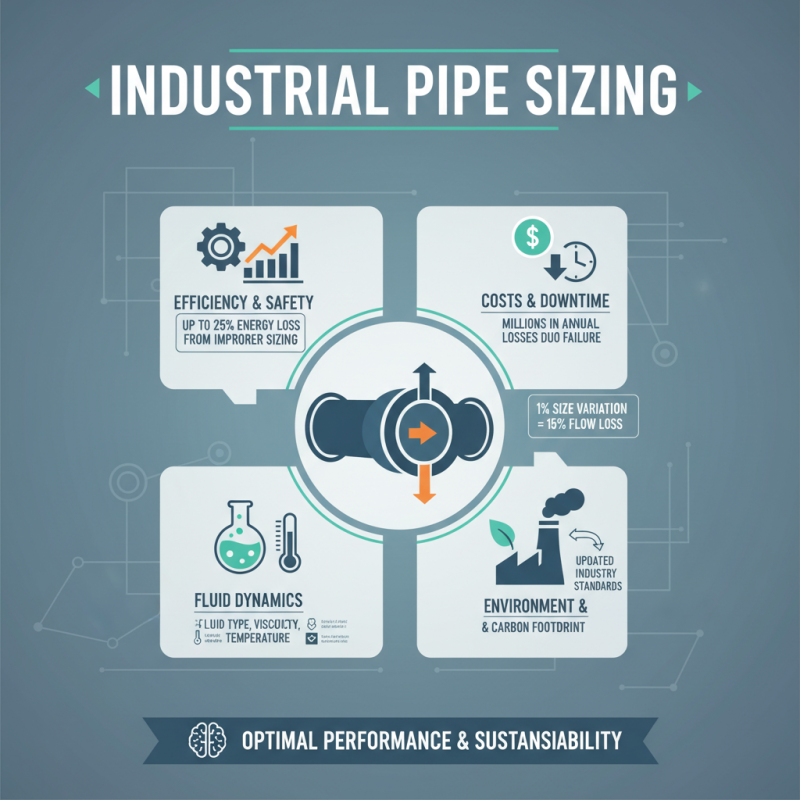
Selecting the right pipe size for industrial systems is critical for efficiency and safety. According to the Hydraulic Institute, improper sizing can lead to energy losses of up to 25%. This can significantly impact operational costs and maintenance efforts. Understanding how to select pipe size for industrial systems can help streamline these processes, ensuring optimal flow rates and pressure stability.
In various industries, the costs associated with downtime due to pipe failure can exceed millions annually. Research by the American Society of Mechanical Engineers highlights that a mere 1% variation in pipe size can lead to 15% losses in flow. This demonstrates the importance of precision in sizing. Yet, many professionals often underestimate the role of factors like fluid type, viscosity, and temperature.
It's also essential to consider the environmental impact. Oversized pipes can result in unnecessary material use and a larger carbon footprint. Engineers must continuously reflect on their methods for sizing pipes. Comprehensive analysis and updated industry standards are crucial. Therefore, mastering how to select pipe size for industrial systems not only enhances performance but also promotes sustainability and cost-effectiveness.
Understanding the Basics of Pipe Sizing in Industrial Applications
Selecting the correct pipe size is critical in industrial systems. The right size ensures efficient fluid transportation and minimizes energy loss. Understanding flow rates, pressure drops, and the type of fluid being transported is essential. Different fluids behave differently under pressure. For instance, viscous liquids require larger diameters for optimal flow.
In many cases, engineers underestimate the importance of accurate sizing. A pipe that is too small can create bottlenecks, leading to increased operational costs. Oversized pipes waste materials and space, thus complicating the system. Fluid dynamics plays a significant role here. For example, a change in temperature can affect viscosity, which in turn impacts the required pipe size.
Consider also the environment where the pipes will be installed. Factors like temperature extremes and potential corrosion must be taken into account. It’s vital to choose materials that match the application. Regular reviews and updates to the sizing calculations can help keep systems efficient. Many overlook this step, which can lead to unforeseen issues down the line.
Factors Influencing Pipe Size Selection in Industries
Selecting the right pipe size is crucial in industrial systems. Several factors influence this decision. Fluid properties, such as viscosity and temperature, play a significant role. A report by the Hydraulic Institute indicates that improper sizing can lead to energy losses of up to 30%. This inefficiency affects overall operational costs.
The system’s flow rate is another critical factor. For instance, a higher flow rate typically necessitates a larger pipe size to minimize pressure drops. According to the American Society of Mechanical Engineers (ASME), smaller pipes can result in excessive turbulence. This turbulence leads to wear and tear, often increasing maintenance costs over time.
**Tip:** Always consider future expansion. A pipe that seems adequate now may not fit future needs. Overestimating size is better than underestimating.
Additionally, material choice can impact size selection. Certain materials may be more suitable for specific fluids. This helps prevent leaks and corrosion. Regular assessments of pipe systems can reveal unforeseen issues, such as sediment buildup, which might necessitate size adjustments.
**Tip:** Consult with industry experts for guidance. They can help interpret data relevant to your specific application.
Factors Influencing Pipe Size Selection in Industries
Calculating Flow Rates and Pressure Drops for Pipes
When selecting the right pipe size for industrial systems, calculating flow rates and pressure drops is essential.
Flow rate refers to the volume of fluid moving through the pipe. It is influenced by the diameter of the pipe and the velocity of the fluid.
Higher flow rates increase efficiency but may lead to issues like turbulence.
Pressure drop occurs due to friction as fluid flows through the pipe. This drop impacts system performance, particularly in larger systems.
To calculate pressure drop, consider factors such as pipe length, diameter, and the type of fluid. Using the Darity-Weisbach equation or simpler methods can help determine the drop effectively.
Sometimes, it’s easy to overlook these calculations, leading to improper pipe sizing. A smaller pipe may save costs initially but can create larger problems later. Conversely, oversized pipes can waste money and space.
Regular assessments and adjustments are necessary to align with changing flow requirements and operational conditions. Knowing when to reevaluate is crucial for maintaining efficiency and effectiveness.
Material Considerations for Industrial Pipe Systems
When selecting the right materials for industrial pipe systems, several factors come into play. The choice of material affects durability, corrosion resistance, and overall system performance. Common materials include steel, PVC, and copper. Each has its strengths and weaknesses. For example, steel is strong but can corrode without proper coatings. PVC is lightweight and resistant to chemicals but may not handle high pressures well.
Corrosion resistance is critical, especially in chemical processing environments. Stainless steel is often favored for its ability to withstand harsh conditions. However, its higher cost may not always justify its use in less aggressive environments. On the other hand, plastic pipes are cost-effective but may degrade over time under UV exposure.
Weight and temperature tolerance are also essential to factor in when choosing pipe material. Heavy materials may require additional supports. Moreover, some materials lose integrity at high temperatures. The decision should always align with the specific requirements of the system. Regular assessments and updates to materials might be necessary as conditions change.
How to Select the Right Pipe Size for Industrial Systems? - Material Considerations for Industrial Pipe Systems
| Material Type |
Typical Applications |
Nominal Pipe Size (inches) |
Max Operating Temperature (°F) |
Pressure Rating (psi) |
| Carbon Steel |
Water, Oil, Gas Transport |
1 to 12 |
800 |
1500 |
| Stainless Steel |
Food, Pharmaceutical, Chemical |
1 to 6 |
1000 |
3000 |
| PVC |
Drainage, Irrigation, Chemical |
0.5 to 12 |
140 |
220 |
| Copper |
Water Supply, Heating Systems |
0.5 to 6 |
400 |
1000 |
| HDPE |
Water, Gas, Waste Management |
2 to 30 |
180 |
160 |
Best Practices for Ensuring Optimal Pipe Size in Design
Selecting the optimal pipe size is crucial for industrial systems. Proper sizing influences flow rates, pressure drops, and system efficiency. Start by evaluating the specific requirements of your application. Consider the type of fluid, temperature, and pressure conditions. Each factor plays a vital role in determining the right dimensions.
Utilizing software tools or empirical formulas can help in selecting pipe sizes. However, experience is invaluable. Sometimes, standard sizes may not fit exactly. In these cases, adjustments might be necessary for specific scenarios. Training staff in these best practices enhances decision-making in selecting the right pipe size.
Regularly review existing systems to identify potential inefficiencies. Outdated or incorrectly sized pipes can lead to significant energy losses. Monitoring flow rates and pressure drops can reveal hidden issues. Foster a culture of continuous improvement in design practices. Learning from past mistakes will lead to better future decisions.
FAQS
: Correct pipe size ensures efficient fluid transportation and minimizes energy loss.
A small pipe can cause bottlenecks, raising operational costs.
Different fluids require varying pipe diameters, especially viscous liquids needing larger sizes.
Temperature changes can affect fluid viscosity, impacting the required pipe size.
Regular updates help maintain efficiency and prevent unforeseen issues in systems.
Pipe length, diameter, fluid type, and flow rate all impact pressure drop.
Software provides calculations, but practical experience is crucial for accurate sizing.
Monitoring flow rates and pressure drops can reveal hidden inefficiencies.
Proper training enhances decision-making when selecting the right pipe size.
Oversized pipes waste materials and create unnecessary complexity in the system.
Conclusion
Selecting the right pipe size for industrial systems is crucial for ensuring efficient fluid transportation and system performance. Understanding the basics of pipe sizing is the first step, as it involves recognizing the flow characteristics and requirements of different industrial applications. Various factors influence pipe size selection, including the type of fluid, temperature, pressure, and specific system demands.
To effectively select pipe size for industrial systems, one must calculate flow rates and assess pressure drops across the system. Material considerations also play a significant role; the chosen pipe material must withstand environmental conditions and the properties of the transported fluid. Finally, adhering to best practices in design, such as maintaining proper flow velocities and minimizing bends, ensures optimal pipe sizing, ultimately leading to enhanced system efficiency and longevity.

 Flowtera Pipe