In the global marketplace, understanding "what standards apply to steel pipes" is crucial for buyers. Steel pipes are essential in various industries, including oil and gas, construction, and water supply. According to a report by the American Society for Testing and Materials (ASTM), over 70% of pipelines worldwide rely on standardized materials to ensure safety and efficiency.
Expert Michael Thompson, a leading figure in steel manufacturing standards, emphasizes, “Compliance with international standards is non-negotiable in our industry.” His insights underline the importance of adhering to established specifications such as ASTM, API, and ISO to meet global expectations. These standards not only dictate quality but also influence the market’s competitive landscape.
However, navigating these standards can be perplexing for inexperienced buyers. Each region may have different regulatory requirements. Understanding these nuances is imperative but often overlooked. Critical evaluations of compliance can lead to significant financial implications. Thus, it’s vital for buyers to seek expertise in this area and make informed decisions.
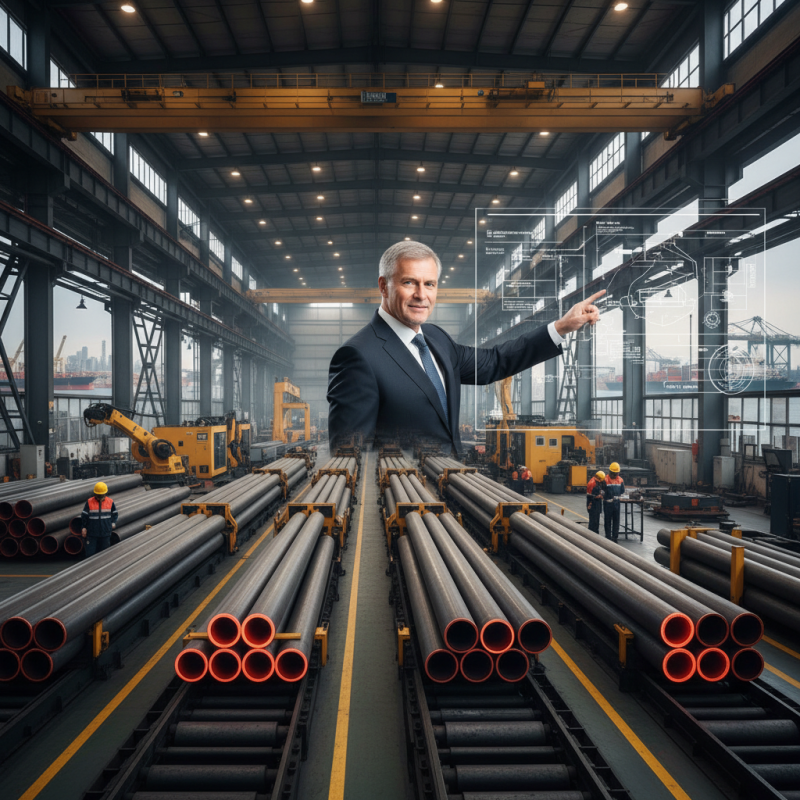
Overview of Steel Pipe Standards for Global Buyers
Steel pipes play a crucial role in various industries, with different standards governing their use globally. Understanding these standards is vital for buyers to ensure product quality and compliance. Common standards include ASTM, API, ISO, and EN, each providing guidelines for material specifications, testing methods, and dimensions. These standards enable consistent performance across diverse applications.
Many buyers may overlook the importance of familiarizing themselves with these standards. Knowledge gaps can lead to purchasing substandard materials. For example, using ASTM A106 instead of A53 can directly impact durability in high-temperature applications. Understanding the specific requirements for applications, such as pressure ratings and corrosion resistance, is essential.
Moreover, buyers should not assume that all manufacturers adhere to these standards equally. Variations in quality control processes can lead to inconsistent product reliability. Buyers should consider third-party testing to verify compliance. This extra step adds assurance but requires time and resources. Engaging suppliers in a conversation about their compliance practices is also recommended. This dialogue can uncover potential issues that may arise during production.
Key International Standards for Steel Pipes
When sourcing steel pipes, understanding international standards is crucial for buyers. Various standards govern material quality, dimensions, and testing methods. Notably, the American Society for Testing and Materials (ASTM) and the International Organization for Standardization (ISO) offer guidelines used worldwide. ASTM A53 and ISO 3183 are common standards relevant to carbon steel pipes. Knowing these can prevent costly mistakes in procurement.
Effective communication with suppliers ensures compliance. Ask them about the specific standards they follow. This can reveal their commitment to quality and safety. For instance, pipes adhering to ISO standards often undergo rigorous testing for durability.
Tip: Always request certification documents when purchasing. This adds a layer of security to your investment. Remember, not all suppliers are familiar with these standards, leading to potential discrepancies. Do your homework and verify their claims.
Moreover, reviewing the latest amendments to these standards is wise. Changes can affect your project's specifications. By staying informed, you enhance your capability to make sound decisions. Trust but verify should be your mantra in this complex landscape.
What Standards Apply to Steel Pipes for Global Buyers? - Key International Standards for Steel Pipes
| Standard |
Description |
Application |
Country/Region |
| ASTM A500 |
Standard specification for cold-formed welded and seamless carbon steel structural tubing in round and shapes. |
Used in construction and structural applications. |
United States |
| API 5L |
Specification for line pipe used in pipeline transportation systems in the oil and natural gas industries. |
Used for oil and gas transport. |
International |
| ISO 3183 |
Standard for specification for line pipe used in pipeline transportation systems, applicable to sour conditions. |
Used for line pipes in corrosive environments. |
International |
| EN 10219 |
European standard for cold formed welded and non-welded structural hollow sections of non-alloy and fine grain steels. |
Used in construction, engineering applications. |
European Union |
| ASTM A53 |
Specification for pipe, steel, black and hot-dipped, zinc-coated, welded and seamless for mechanical and pressure applications. |
Used in general piping applications. |
United States |
Regional Variations in Steel Pipe Standards
When discussing regional variations in steel pipe standards, it's essential to recognize that different countries impose specific regulations. In North America, for example, the American Petroleum Institute (API) and ASTM International provide key standards that assess the quality and safety of steel pipes. According to API’s standard 5L, the material requirements for pipeline transportation are rigorous. This ensures that steel pipes perform effectively under various conditions.
In contrast, Europe adopts the EN standards, which focus heavily on testing and certification processes. The EN 10220 standard, for example, addresses dimensions and mass of steel pipes. This illustrates a different emphasis, prioritizing uniformity and interoperability across countries. Discrepancies in these standards often lead to confusion for global buyers. A report by the International Organization for Standardization (ISO) emphasizes that inconsistent practices create barriers to international trade.
Asia’s standards can vary significantly, reflecting local industry needs. The Chinese GB standard for steel pipes outlines its own tests and specifications, differing from Western approaches. Regional buyers must navigate this complex terrain, where understanding local standards is crucial. The potential for errors in compliance can result in costly delays and disputes.
Compliance and Testing Requirements for Steel Pipes
When exporting steel pipes globally, compliance and testing are paramount. The International Organization for Standardization (ISO) and the American Society for Testing and Materials (ASTM) provide crucial guidelines. For steel pipes, ISO 3183 and ASTM A106/A53 outline specifications for quality and testing. Adherence to these standards minimizes the risk of failures and ensures safety.
In the steel pipe industry, certain testing requirements are essential. These include mechanical testing, hydrostatic testing, and non-destructive testing (NDT). Mechanical tests assess tensile strength and ductility. Hydrostatic testing evaluates the pipe's ability to withstand pressure. NDT methods, such as ultrasonic testing, detect internal flaws. A study by the American Petroleum Institute (API) indicates that nearly 25% of pipe failures are linked to inadequate testing practices.
Tip: Always verify the certification and testing reports of your suppliers. This ensures that the pipes meet industry standards. Be cautious of suppliers who cannot provide clear documentation on compliance. A lapse in due diligence can lead to costly project delays. The right certification can save you from future headaches.
Understanding Certification Processes for Steel Pipe Products
When purchasing steel pipes, understanding
certification processes
is crucial for global buyers. Certifications ensure that products meet specific
industry standards. Different regions have varying requirements. Buyers must be
familiar with these standards to ensure compliance.
The certification process often involves rigorous testing. This testing
measures aspects such as strength, durability, and resistance to corrosion. Buyers
should ask for detailed reports from suppliers.
These documents provide proof of
compliance with relevant standards. Yet, not all suppliers will have complete
documentation. This lack of transparency can lead to challenges.
Trust is essential in
these transactions. Buyers need to verify certifications independently when possible.
This step helps confirm the reliability of products. It's important to remember
that not all certifications are created equal. Some may hold more weight in
particular markets. Understanding the nuances of certification can
ultimately lead to better purchasing decisions.
FAQS
: Key standards include ASTM, API, ISO, and EN. Each provides guidelines for material specifications and testing methods.
Knowing the standards ensures product quality and compliance. It prevents buyers from purchasing substandard materials.
Choosing ASTM A106 over A53 affects durability in high-temperature applications. Misunderstanding this can be costly.
Buyers should consider third-party testing and engage suppliers in discussions about compliance practices.
Certifications verify that products meet industry standards. This helps ensure that buyers receive reliable products.
Buyers should ask for detailed compliance reports. Incomplete documentation might indicate potential issues.
Verifying certifications independently helps confirm product reliability. Not all certifications hold the same value in every market.
Lack of complete documentation can lead to purchasing decisions based on incorrect information. This needs careful reflection.
Quality control processes vary among manufacturers. This inconsistency can impact product reliability significantly.
No, some certifications are more respected in certain regions. Understanding these nuances helps in making informed choices.
Conclusion
In the global marketplace for steel pipes, it is essential for buyers to understand what standards apply to steel pipes to ensure product quality and compliance. The article outlines key international standards that govern the manufacturing and testing of steel pipes, including ASTM, API, and ISO standards. It highlights how these standards vary regionally, taking into account local regulations and practices that impact procurement decisions.
Additionally, the article emphasizes the importance of compliance and rigorous testing requirements that steel pipes must meet before they reach the market. Understanding the certification processes for steel pipe products is crucial for buyers to verify that their suppliers adhere to the necessary standards. By navigating these standards effectively, global buyers can make informed purchasing decisions and ensure the reliability and safety of steel pipe products.

 Flowtera Pipe