Steel pipe compliance is not governed by one universal rule. The answer to “what standards apply to steel pipes” depends on service, dimensions, pressure, temperature, steel grade, and destination market. A water-line pipe may follow AWWA requirements, while an oil and gas line often requires API 5L or ISO 3183. ASME B36.10M and B36.19M define widely used dimensions for carbon steel and stainless steel pipe. ASTM A53 and ASTM A106 remain common references for general and high-temperature applications.
The market context is substantial. World Steel Association’s World Steel in Figures 2025 reported global crude steel production of approximately 1.84 billion tonnes in 2024. That scale increases the importance of traceability, consistent testing, and qualified documentation. API and ISO publications also emphasize material identification, mechanical testing, nondestructive examination, and manufacturing controls. For structural hollow sections, EN 10210 and EN 10219 may apply, depending on the production route and design requirement. European projects can also involve the Pressure Equipment Directive, harmonized standards, and CE-related conformity procedures.
Yet standards are not interchangeable checkboxes. A pipe can meet its dimensional standard and still fail a project specification. I have seen procurement mistakes begin with a missing suffix, an unclear grade, or an outdated edition. That detail matters. Engineers should verify the latest adopted edition, purchaser specifications, mill certificates, heat numbers, inspection plans, and local regulations before approval. This article examines the principal standards expected in 2026, their practical differences, and the evidence needed to demonstrate reliable compliance. Some requirements remain open to interpretation, so professional review is still essential.
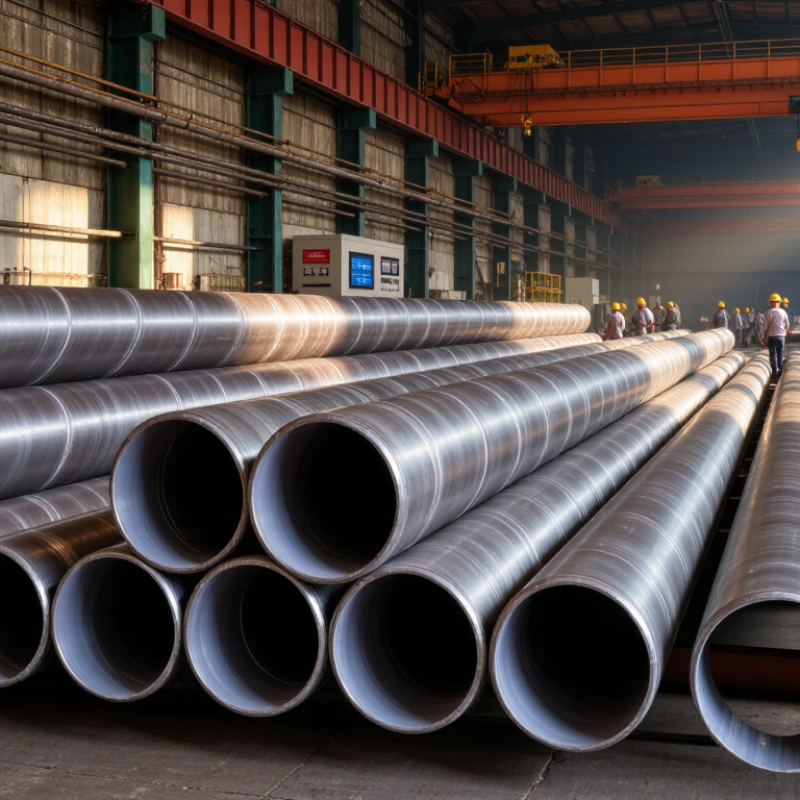
In 2026, steel-pipe selection should begin with service, not diameter.
A pipeline carrying gas needs different controls from a warehouse column or hydraulic cylinder. The World Steel Association reported about 1.89 billion tonnes of crude steel production in 2024. That scale hides a practical problem: identical-looking pipes can follow very different standards.
For line-pipe service
specify ISO 3183 and confirm grade, weldability, toughness, and sour-service requirements. Pressure piping may require ASME B31.1, B31.3, or B31.4, depending on the fluid and installation. EN 10216 and EN 10217 also distinguish seamless and welded pressure tubes. Check design pressure, temperature, corrosion allowance, and testing records. A certificate alone is not enough.
Structural applications commonly use EN 10219 or ASTM A500
with attention to yield strength, wall thickness, and connection design. Mechanical tubing may follow ASTM A519 or EN 10297, where dimensional accuracy and surface condition often matter more than pipeline toughness.
This boundary is easy to miss. It should not be. A structural tube is not automatically suitable for pressure duty, even when its measured strength looks impressive.
Field audits still find mismatched specifications, incomplete heat numbers, and unclear impact-test temperatures. That is uncomfortable, but realistic. Procurement teams should record the intended use, governing code, inspection level, and local regulatory requirements before ordering.
Pipe selection should follow service conditions, not habit. API 5L suits line pipe for oil, gas, and other transmission systems. It defines product levels, chemical limits, mechanical properties, testing, and traceability requirements.
ASTM A53 fits many general-purpose pressure and structural applications. It covers welded and seamless carbon steel pipe, with grades and manufacturing requirements suited to less demanding duties.
ASME B36.10M does something different. It standardizes outside diameters, wall thicknesses, and schedules for welded and seamless steel pipe. It does not prove that the pipe is suitable for a specific fluid.
The World Steel Association reported about 1.88 billion tonnes of crude steel production in 2024. That scale does not guarantee consistent pipe quality. Mill certificates, heat numbers, nondestructive testing, and impact results still need review.
A practical match might specify API 5L for a transmission line, then use ASME B36.10M dimensions for purchasing. ASTM A53 may work for water, air, or utility piping after engineering approval.
Service temperature changes the decision. Corrosive fluids may require tougher materials, coatings, or corrosion allowances.
This is where many specifications become vague. They name a standard but omit pressure cycles, welding procedures, or inspection levels.
Engineers should verify the complete design basis against the latest editions, project codes, and local requirements. Standards are tools, not shortcuts.
For 2026 projects, API Specification 5L remains a key reference for line pipe. Its strength classes are identified by yield strength in ksi and MPa. X42 requires a minimum yield strength of 290 MPa. X46 reaches 317 MPa, while X52 requires 359 MPa. X56 and X60 specify 386 MPa and 414 MPa, respectively. Higher grades include X65 at 448 MPa and X70 at approximately 483–485 MPa. These values reflect the minimum yield levels listed in API 5L, 46th edition.
Strength is not the whole purchasing decision. A field engineer should also check wall thickness, weldability, fracture toughness, chemical limits, and impact-test requirements. Pipeline design codes, including ASME B31.4 and B31.8, may impose additional conditions. The applicable edition should match the project’s contract and regulatory framework. Do not assume that a higher grade automatically provides better service.
Recent energy outlook reports from the International Energy Agency continue to show substantial investment in gas networks, hydrogen systems, and carbon transport infrastructure. That demand increases interest in X65 and X70 pipes. However, higher strength can narrow welding procedures and inspection tolerances. The shortcut is tempting. It is not always economical. A practical review should compare the required operating pressure with the pipe’s actual tested properties, rather than relying only on the grade name. Even published tables deserve checking against the current specification.
Steel pipe verification starts with the correct standard and edition. ISO 3183 applies mainly to line pipe used in pipeline transportation systems. EN 10219 covers cold-formed welded structural hollow sections. ASME B36.10M lists nominal pipe dimensions, including outside diameter and wall thickness.
Do not treat these documents as interchangeable. A pipe may match the required outside diameter but fail wall-thickness tolerance, ovality, straightness, or length requirements.
Check the purchase specification against the selected standard. Confirm pipe grade, manufacturing route, end preparation, and inspection class.
For example, measure several points around each pipe end. A single caliper reading can hide local deformation. That mistake happens more often than expected.
Tips: Build a dimensional checklist before inspection. Record outside diameter, wall thickness, length, straightness, and end condition. Compare actual readings with the applicable tolerance table, not a general catalog. Request material certificates and inspection records with traceable heat numbers. When standards overlap, ask the engineer to identify the governing document in writing. It may seem slow. It prevents costly rework.
What Standards Apply to Steel Pipes in 2026?
Steel pipe compliance in 2026 depends on service, grade, dimensions, and destination. API Spec 5L remains widely used for line pipe. ASTM A106/A106M covers seamless carbon steel pipe for high-temperature service. ASME B31.3 then governs process piping design and inspection. These standards are not interchangeable.
Testing begins with hydrostatic pressure. The test should confirm leak resistance, pressure stability, and documented holding time. NDE may include ultrasonic, radiographic, magnetic-particle, or eddy-current examination. ISO 9712 supports qualification of NDE personnel. The inspection method must match the pipe’s risk and manufacturing route. More testing is not always better. Poorly chosen testing can miss the real defect.
Heat records deserve equal attention. Each pipe should connect to a heat number, chemical analysis, mechanical results, and production route. EN 10204 type 3.1 documentation can support this chain. The World Steel Association’s World Steel in Figures 2025 reports about 1.88 billion tonnes of crude steel production in 2024. At that scale, traceability cannot depend on handwritten memory.
Tips: Request the test procedure before production. Check calibration dates, gauge ranges, NDE operator credentials, and pressure charts. Compare heat numbers on pipes, reports, and certificates. A clean certificate is useful, but it is not physical proof. I have seen paperwork look complete while one heat number was copied incorrectly. That small error can delay release—or force a costly retest.
Typical inspection coverage in widely used steel-pipe specifications. A score of 2 means the item is commonly specified as a direct requirement; 1 means it is conditional or may be accepted as an alternative route. The exact obligation depends on the selected edition, product type, grade, PSL/class, and purchase order.
Hydrostatic pressure testing is broadly specified for pressure-containing pipe. Non-destructive examination may depend on weld type, product category, inspection level, or whether it is used as an alternative to hydrostatic testing. Heat-number traceability and material test certification support verification of chemistry, mechanical properties, heat treatment, and production records.
Reference specifications represented: API 5L, ASTM A53/A53M, ASTM A106/A106M, ASTM A312/A312M, and EN 10216-2. Confirm the current 2026 edition and project-specific requirements before procurement or certification.
X42 requires a minimum yield strength of 290 MPa. This value is only one purchasing factor.
X42 starts at 290 MPa, while X52 reaches 359 MPa. X60 requires 414 MPa, and X70 reaches approximately 483–485 MPa.
No. Higher strength may restrict welding procedures, inspection tolerances, and fracture-control options.The shortcut can mislead.
Review wall thickness, weldability, fracture toughness, chemical limits, impact tests, and actual tested properties.Grade names are not enough.
Measure outside diameter, wall thickness, length, straightness, ovality, and end condition.Measure several points.
No. One reading can miss local deformation near the pipe end. Record multiple measurements against the applicable tolerance table.That mistake is common.
Request hydrostatic results, NDE reports, calibration dates, pressure charts, chemical analysis, and mechanical test results.Paperwork needs checking.
Heat numbers connect each pipe with its chemical results, mechanical tests, and production route.A copied number can delay release.
Ask the project engineer to identify the governing document and edition in writing.I would not assume the documents are interchangeable.
Determining what standards apply to steel pipes in 2026 begins with identifying their intended use. Line pipes, pressure-service pipes, structural sections, and mechanical tubing each require different performance criteria. Common references include API 5L for pipeline applications, ASTM A53 for general-purpose and pressure piping, and ASME B36.10M for standardized dimensions. Selecting the correct standard helps align material, manufacturing, and service requirements.
Strength classification is also essential. API 5L grades such as X42 through X70 provide yield strengths ranging from approximately 290 to 485 MPa, supporting different pressure and operating conditions. Buyers should verify outside diameter, wall thickness, length, and permitted deviations under applicable requirements, including ISO 3183, EN 10219, and ASME B36.10M. Final acceptance should include hydrostatic pressure testing, appropriate non-destructive examination, heat-number identification, material certificates, and full traceability from production through delivery.

Flowtera Pipe