China Top 10 Tips for Choosing Seamless vs Welded Pipes?

Time:2026-05-31 Author:Oliver
0%

Choosing the right type of pipe is crucial for any project. Industry reports indicate that seamless pipes account for approximately 30% of global pipe production, highlighting their importance. However, many engineers still face challenges in differentiating between seamless and welded options.

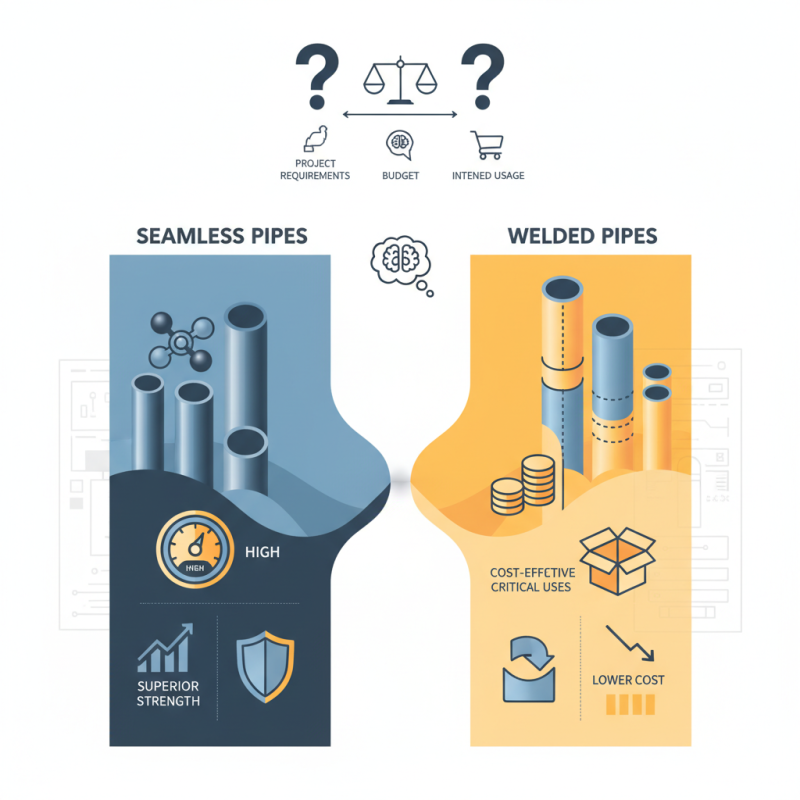
In the words of industry expert Dr. Mark Thompson, “Understanding how to choose between seamless and welded pipes can save time and costs.” Both types offer unique benefits, yet the decision requires careful consideration. For instance, seamless pipes exhibit superior strength and are often favored in high-pressure applications. Conversely, welded pipes are cost-effective and suitable for less critical uses.

When assessing your needs, evaluate the project requirements, budget, and intended usage. The nuances between seamless and welded pipes can significantly impact performance and durability. It’s important to reflect on these factors and prioritize the best choice for your specific application.
China Top 10 Tips for Choosing Seamless vs Welded Pipes?

Understanding the Difference Between Seamless and Welded Pipes

Understanding the difference between seamless and welded pipes is crucial for various applications. Seamless pipes are created from a solid round steel brick. This process allows for a smooth, continuous pipe without any joints. The absence of welding reduces the weak points, making seamless pipes ideal for high-pressure applications. They are commonly used in industries like oil and gas, where safety is a priority.

On the other hand, welded pipes start as flat plates, which are rolled and then welded together to form a pipe. This process is often more economical. However, the weld can be a point of weakness, especially under extreme conditions. Welded pipes are versatile and widely used in construction and drainage systems. They can be produced in larger diameters compared to seamless pipes, making them suitable for low-pressure applications.

Choosing between these two types involves considering factors like application, pressure requirements, and budget. Careful evaluation is essential. Each option has pros and cons, and understanding your needs will lead to a more informed decision. Sometimes, it's better to seek expert advice rather than rely solely on product specifications.

Key Factors to Consider When Choosing Pipe Materials

When choosing between seamless and welded pipes, several key factors should guide your decision. Material properties play a crucial role in this choice. Seamless pipes generally offer higher strength and are less prone to corrosion. They are ideal for high-pressure applications. On the other hand, welded pipes can be more affordable and easier to produce in larger sizes.

Another important consideration is the intended application. For instance, if the pipe will be used in extreme conditions, seamless options may be more reliable. However, for less demanding situations, welded pipes can suffice. It's essential to evaluate the environment where the pipes will operate.

Quality assurance and standards are also vital. Not all pipes, regardless of their construction type, meet the same quality benchmarks. Always check for industry certifications. This research can prevent future issues. Remember that even the most robust pipes may fail if not properly maintained. Adopting a proactive stance on inspection can mitigate potential risks.

Applications Best Suited for Seamless Pipes

When considering seamless pipes, understanding their applications is crucial. Seamless pipes excel in environments where high pressure and temperature are prevalent. Industries such as oil and gas often rely on them for transporting fluids. These pipes can withstand extreme conditions, making them ideal for critical systems.

Another significant application of seamless pipes is in the construction sector. They are frequently used in structural frameworks and heavy machinery. The consistent thickness provides strength and durability, which is essential for safety. However, the cost of seamless pipes can be higher than welded options. This difference may lead some to question their suitability for specific projects.

While seamless pipes offer many benefits, not every application requires them. For lower-pressure systems or where budget constraints exist, welded pipes might be adequate. It's important to evaluate the specific needs of each project. Only then can the right type of pipe be chosen effectively. Balancing cost, performance, and safety is essential in making a well-informed decision.

Applications Best Suited for Welded Pipes

Welded pipes are often preferred in many applications due to their cost-effectiveness and versatility. An industry report highlights that over 50% of the total pipe market uses welded pipes, particularly in construction and infrastructure projects. These pipes can be produced in long lengths, reducing the need for joints and minimizing the risk of leakage. This characteristic is especially important in water supply and structural applications.

In oil and gas applications, welded pipes play a critical role. According to a study, approximately 65% of the pipelines in this sector are welded due to their ability to withstand high pressures. They are also well-suited for onshore construction, where accessibility allows for quick and efficient assembly. However, there are limitations. For instances involving extreme temperatures or corrosive environments, welded pipes may not always perform adequately. A recent analysis indicated that about 15% of welded pipes fail in such conditions, raising concerns among engineers.

Choosing welded over seamless pipes depends on the specific demands of the project. For less critical applications, welded pipes are usually acceptable. However, in high-stakes environments, seamless alternatives might be necessary. Thus, understanding the trade-offs is vital for ensuring the integrity and safety of the installation.

China Top 10 Tips for Choosing Seamless vs Welded Pipes

Criteria Seamless Pipes Welded Pipes
Manufacturing Process Hollowed-out solid billets Welding two edges of a flat sheet
Strength Higher tensile strength Good strength, but can be weaker at weld
Cost More expensive Generally cheaper
Common Applications Oil, gas, and high-pressure systems Water, low-pressure applications
Durability Highly durable and resistant Moderately durable
Corrosion Resistance Better options available Dependent on welding material
Lifespan Longer lifespan Shorter lifespan
Weight Generally heavier Lighter compared to seamless
Availability Limited sizes and types Wide availability
Installation Complexity Requires specialized knowledge Easier to install

Cost Analysis and Budget Considerations for Pipe Selection

When choosing between seamless and welded pipes, cost is a key concern. Seamless pipes tend to be more expensive due to their manufacturing process. They are created from solid metal that is molded into shape, which reduces the risk of leaks. This higher quality often means higher upfront costs. Budgeting for these pipes requires looking beyond initial prices.

Welded pipes offer a more economical option. They are produced by welding together flat strips of metal. While their initial cost is lower, they may face limitations in high-pressure situations. Maintenance costs can also add up over time, particularly in harsh environments. A proper cost analysis should account for these factors, including potential repairs and replacements.

Reflecting on long-term use is crucial. Sometimes, a cheaper option may lead to more expenses later. Reliable suppliers can provide insights on the best options for your specific needs. Weighing the pros and cons helps in making a thoughtfully informed decision. Planning your budget around these considerations is essential for any project.

FAQS

: What are the key factors to consider when choosing pipe materials?

: Consider material properties, application conditions, and quality standards. These aspects will impact pipe performance significantly.

Why would someone choose seamless pipes over welded ones?

Seamless pipes offer higher strength and lower corrosion risk. They are ideal for high-pressure and extreme conditions.

Are welded pipes a good choice for all applications?

Welded pipes are cost-effective and versatile but may not perform well in extreme temperatures or corrosive environments.

How does the manufacturing process affect pipe costs?

Seamless pipes are generally more expensive due to their solid metal production. Welded pipes are cheaper because they use flat strips.

What maintenance considerations should be taken into account?

Regular inspections are necessary. Even robust pipes can fail without proper upkeep, leading to unexpected costs.

How important is quality assurance in pipe selection?

Quality assurance is crucial. Not all pipes meet the same standards, so checking industry certifications is essential.

Can welded pipes handle high pressures effectively?

They can, but about 15% may fail under extreme conditions. Understanding project demands is vital for reliability.

How can overestimating budget costs impact projects?

Choosing cheaper pipes may lead to more expenses later. Long-term reflections can save money down the line.

What should be considered regarding installation environments?

Evaluate expected conditions. For harsh environments, seamless pipes might be better, while welded works for less critical needs.

What are the benefits of using welded pipes in construction?

They can be produced in long lengths, reducing joints and leak risks, making them suitable for water supply systems.

Conclusion

When considering how to choose between seamless and welded pipes, it’s essential to understand the fundamental differences between the two. Seamless pipes are made from a single piece of material and offer higher strength and pressure resistance, making them ideal for high-stress applications. In contrast, welded pipes are manufactured by welding together pieces of material, which can make them more cost-effective and suitable for lower-pressure applications.

Key factors to consider include the specific application requirements, the materials needed, and budget constraints. For instance, seamless pipes excel in industries that demand integrity and reliability, such as oil and gas, while welded pipes are often used in construction and plumbing due to their affordability. A thorough cost analysis should be conducted to balance the initial investment against long-term performance and durability needs, ensuring the best choice for each unique situation.

Oliver

Oliver

Oliver is a seasoned marketing professional with a wealth of expertise in driving brand awareness and engagement. With a deep understanding of our company's product offerings, he consistently delivers high-quality content that enriches our professional blog. His insights not only shed light on......