Understanding the manufacturing process of steel pipes is crucial for industry professionals. Dr. Emily Johnson, a noted expert in metallurgical engineering, once stated, "The precision in manufacturing steel pipes defines their performance in real applications." Her insights highlight the importance of proper techniques in this field.
The manufacturing process of steel pipes involves several key stages. These include the selection of raw materials, processes like welding or seamless formation, and heat treatment. Each step requires careful attention to detail. It's not just about producing pipes; it's about ensuring they meet industry standards.
However, challenges do exist. Variations in quality can arise from inconsistent material selection or inadequate processing techniques. These issues may lead to unexpected failures or inefficiencies in the final product. A deeper exploration of what is the manufacturing process of steel pipes reveals the need for continual improvement in standards and practices.
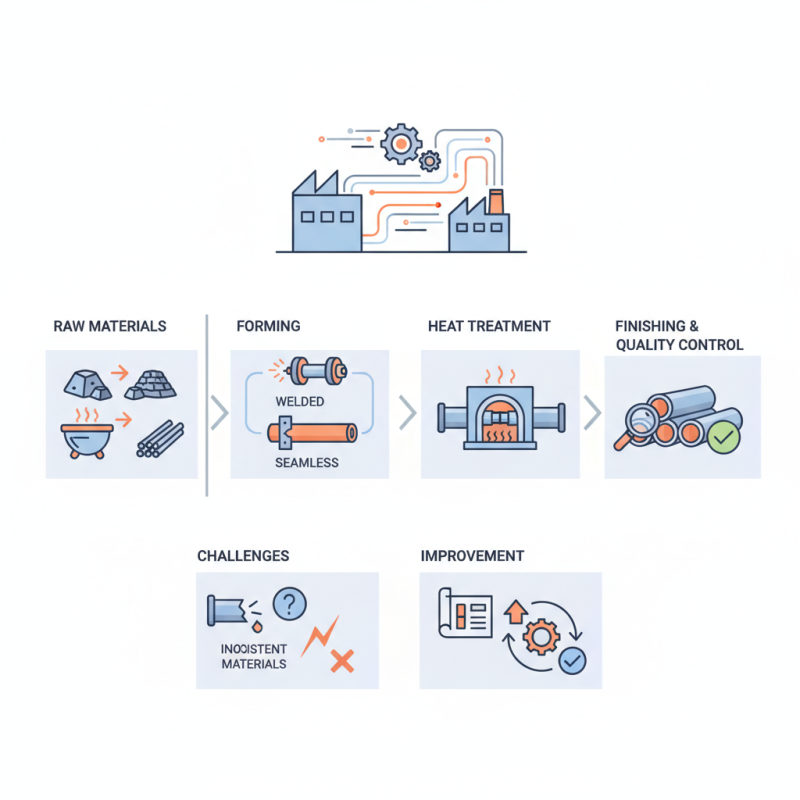
Steel pipe manufacturing involves several crucial processes that ensure the production of high-quality pipes. The initial step is raw material selection. Steel makers often choose iron ore, scrap steel, and alloying elements. Each material impacts the final product’s strength and durability. In this phase, careful consideration is crucial for meeting the specifications required in various applications.
Once materials are selected, the manufacturing process moves to the melting stage. Here, the raw materials are heated in a furnace until they liquefy. This step requires precise temperature control to achieve the desired chemical composition. The molten steel is then cast into a semi-finished form, typically as slabs or billets, which will later be further processed. The next phase is forming, where these semi-finished products are transformed into pipes through techniques like extrusion or rolling. Each method carries its own challenges—maintaining uniform thickness is often difficult.
The final stages include heat treatment and surface finishing. Heat treatment enhances the mechanical properties of the steel pipes. Surface finishing removes impurities and can improve corrosion resistance. However, these processes sometimes expose underlying flaws that may arise from earlier stages. Proper inspection techniques can identify these issues. A robust quality assurance program is vital to ensure the pipes will perform as intended.
The production of steel pipes begins with careful raw material selection. Steel is primarily made from iron ore, coal, and limestone. The quality of these materials directly impacts the final product's durability and strength. According to industry data, more than 70% of steel's properties depend on the quality of iron ore used.
When selecting raw materials, factors like purity and carbon content come into play. High-quality iron ore should have low impurities, which can compromise pipe integrity. The use of recycled steel in production is also becoming popular, contributing to sustainability. In fact, studies show that almost 30% of steel is recycled, reducing the need for virgin raw materials.
Another crucial aspect is the sourcing location of these materials. Local sources can lower transportation costs and improve supply chain reliability. Some reports indicate that transportation can account for up to 15% of production costs. However, reliance on local materials may limit access to higher-quality inputs. It's essential for manufacturers to balance cost with quality to ensure optimal manufacturing outcomes.
| Raw Material | Material Type | Typical Applications | Chemical Composition (%) | Mechanical Properties |
|---|---|---|---|---|
| Carbon Steel | Steel | Construction, automotive | C: 0.05-0.25, Mn: 0.4-1.8 | Yield Strength: 250 MPa |
| Alloy Steel | Steel | Oil & gas, machinery | C: 0.1-0.5, Mn: 0.4-0.9, Cr: 0.5-6 | Tensile Strength: 520 MPa |
| Stainless Steel | Steel | Pipelines, food industry | C: < 0.03, Cr: 10.5-30, Ni: 8-20 | Corrosion Resistance: Excellent |
| Galvanized Steel | Steel | Construction, automotive parts | C: 0.1-0.2, Zn: 5-15 | Corrosion Resistance: Good |
| Plastic | Polymer | Water pipes, insulation | N/A | Flexibility: High |
The manufacturing process of steel pipes involves several key techniques that impact quality and durability. One fundamental method is the seamless pipe production technique, which creates pipes without welds. This reduces the risk of failure under pressure. According to the World Steel Association, approximately 70% of steel pipes produced globally are seamless.
Welded pipes are another prevalent technique. They are manufactured by rolling steel sheets and welding them together. This process is cost-effective and efficient, suitable for large volumes. A report from the American Iron and Steel Institute indicates that welded pipes account for about 30% of the steel piping market, highlighting their important role.
Tips: When selecting a manufacturing technique, consider the application of the steel pipe. Seamless pipes offer strength for high-pressure applications, while welded pipes are ideal for lower-pressure scenarios. Ensure your supplier adheres to international standards for manufacturing. This guarantees reliability and performance.
Understanding these techniques is crucial for engineers and buyers. The choice between seamless and welded pipes can influence project success. However, always assess the specific needs before making decisions. Data trends indicate an increasing demand for advanced manufacturing methods. This push for innovation may lead to new materials or processes in the future. Reflection on these trends can drive better choices in procurement.
Quality control is essential in steel pipe production. It ensures that the final product meets industry standards and customer expectations. During manufacturing, steel pipes undergo various tests. These tests check for durability, strength, and resistance to corrosion. Each step of the process requires meticulous attention to detail.
One of the crucial aspects of quality control is material inspection. Raw materials must be assessed for purity and strength. Inadequate materials can lead to significant issues later on. The welding process also demands strict monitoring. If welds are weak, the entire pipe's integrity can be compromised. Operators must be trained to recognize potential flaws.
Documentation plays a significant role in quality control. Recording each stage of production helps identify any discrepancies. It allows manufacturers to trace problems to a specific point in the process. Regular audits can reveal areas needing improvement. Yet, companies often overlook this aspect, affecting overall quality. Quality control in steel pipe production is not just a checklist; it's an ongoing commitment to excellence.
Manufactured steel pipes find their way into numerous applications across various industries. Commonly, they are used in construction for structural support. In water supply systems, they provide reliable transport of water. Their strength and durability make them essential in oil and gas industries, where high pressure is involved.
Beyond utility, steel pipes are pivotal in manufacturing. They serve as conduits for steam in power plants. They also play a role in automotive frameworks. Despite their benefits, steel pipes can experience corrosion over time. This issue often demands maintenance or replacement. Understanding these challenges is crucial for effective application.
Another notable application is in telecommunications. Steel pipes protect cables and wiring, ensuring minimal disruption. Additionally, industries are focusing on eco-friendly practices. The production of steel pipes can have environmental impacts. Hence, finding sustainable manufacturing methods is vital. These considerations shape the future of steel pipe applications.
: Raw materials include iron ore, scrap steel, and alloying elements, impacting strength and durability.
The raw materials are heated in a furnace until they liquefy, requiring precise temperature control.
Pipes are formed through processes like extrusion or rolling, each with challenges in maintaining thickness.
Heat treatment enhances mechanical properties but may expose flaws from earlier stages, needing careful inspection.
Seamless pipes have no welds, reducing failure risk under pressure, especially for high-pressure applications.
Welded pipes are made by rolling sheets and welding them together, making them cost-effective for large volumes.
Steel pipes are used in construction, water supply, oil and gas, manufacturing, and telecommunications.
Corrosion can occur, leading to the need for maintenance or replacement, which is an important consideration.
Manufacturing methods impact the environment, so finding eco-friendly practices is essential for future applications.
Choosing between seamless and welded pipes affects reliability; specific application needs must always be assessed.
The manufacturing process of steel pipes involves several key stages that ensure the production of high-quality products. It begins with the careful selection of raw materials, which are essential for achieving desired properties in the final pipe. Various manufacturing techniques are employed, including welding, extrusion, and casting, which play a crucial role in shaping the steel into pipes that meet specific standards.
Quality control measures are integral throughout the process to ensure that the finished pipes are durable and reliable for their intended applications. These pipes find uses across various industries, ranging from construction to automotive, underscoring their versatility. Understanding what is the manufacturing process of steel pipes can provide insights into the numerous considerations and technologies that contribute to this vital industry.

Flowtera Pipe