Explore our primary range of carbon steel, galvanized, duplex stainless, and high-strength structural pipeline systems.
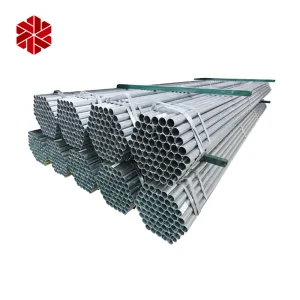
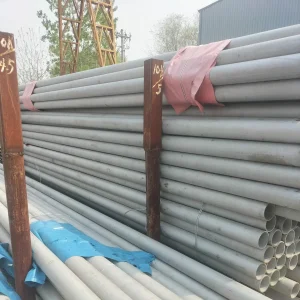
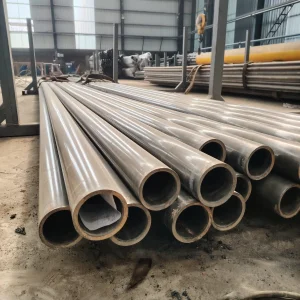
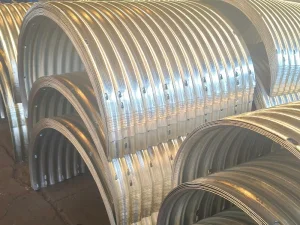
In the contemporary industrial topography, welded carbon steel pipes act as the central arterial network for global infrastructure, energy distribution, and mechanical engineering. These components are critical for transporting fluids, gaseous hydrocarbons, and structural loads. According to global metallurgical reports, the shift from seamless alternatives to modern high-frequency induction (HFI) and electric resistance welded (ERW) steel pipes has accelerated due to major advancements in weld-seam integrity and thickness consistency.
Within this expanding international supply chain, the significance of European Conformity (CE Certification) cannot be overstated. CE marking serves as a regulatory requirement for products entering the European Economic Area (EEA), certifying compliance with rigorous mechanical strength, chemical composition, and safety standards under the Construction Products Regulation (CPR). As global standards harmonize, engineers in North America, the Middle East, and Asia-Pacific increasingly utilize CE standards (such as EN 10219 for structural hollow sections and EN 10217 for pressure pipelines) as benchmarks for reliability and structural performance.
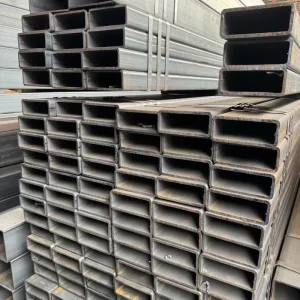
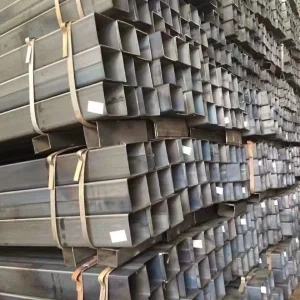
Adherence to European CPD/CPR directives ensures that steel grades S235JRH, S275J0H, and S355J2H meet yield and tensile limits under variable pressures.
Utilizing automated inline weld testing technology, incorporating Ultrasonic Inspection (UT) and Electromagnetic Testing (ET) to ensure flaw-free seams.
Direct partnerships with primary hot-rolled coil mills guarantee precise control over carbon equivalent (CEV) ratios, improving field weldability.
Guangzhou Flowtera Pipe Co., Ltd. is a specialized manufacturer of alloy steel pipes and stainless steel tubes, providing reliable industrial piping solutions for global engineering and infrastructure projects. Based in Guangzhou, a key industrial and logistics hub in China, the company integrates advanced manufacturing technology with efficient supply chain management to ensure consistent quality and timely delivery.
Established in 2011, Flowtera began as a regional supplier of standard steel pipes for construction and mechanical applications. By 2015, the company expanded into high-performance alloy steel and stainless steel piping, investing in modern production lines for seamless and welded tubes. In 2019, Flowtera further strengthened its capabilities by introducing precision testing equipment and automated inspection systems, enabling compliance with international standards and demanding project requirements.
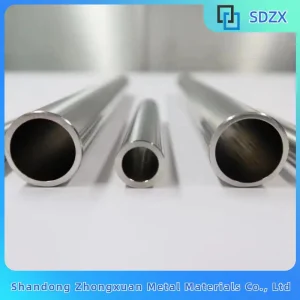
The company’s product range includes seamless alloy steel pipes, welded stainless steel tubes, duplex and super duplex pipes, as well as customized solutions for high-pressure, high-temperature, and corrosive environments. These products are widely used in industries such as oil and gas, petrochemical, power generation, shipbuilding, and construction.
Guangzhou Flowtera Pipe Co., Ltd. operates under strict quality management systems and holds certifications including ISO 9001, with products meeting ASTM, EN, and DIN standards. Committed to innovation, safety, and customer satisfaction, Flowtera continues to serve clients worldwide with durable and cost-effective piping solutions.
Established operations in Guangzhou, China. Focused on manufacturing standard carbon steel structural pipes and developing domestic distribution channels.
Expanded production to high-grade alloy steel and stainless steel pipes. Built dedicated high-frequency electric resistance welded (ERW) lines.
Upgraded inspection facilities with automated ultrasonic (UT) and hydrostatic testing systems, conforming to rigorous CE certifications for pressure pipelines.
Leveraging advanced analytics and automated welding lines to deliver custom solutions for international industrial projects.
To ensure high performance across various temperatures and pressures, welded carbon steel pipes must strictly comply with material standards. The table below outlines key dimensions, certifications, and design criteria used by international engineering firms:
| Standard Ref. | Common Steel Grades | Applicable Application Field | Mechanical Target Range | Inspection Protocol |
|---|---|---|---|---|
| EN 10219-1/2 (CE Marked) | S235JRH, S275J0H, S355J2H | Cold formed welded structural hollow sections | Yield: 235 - 355 MPa Tensile: 360 - 630 MPa |
Visual dimension audit, Charpy impact test at -20°C, Tensile elongation test |
| EN 10217-1/2 (CE Marked) | P235TR1/TR2, P265TR1/TR2 | Welded steel tubes for pressure purposes (Ambient temp) | Yield: ≥235 MPa Tensile: 360 - 500 MPa |
Hydrostatic pressure validation, 100% Nondestructive Weld (NDT) verification |
| ASTM A53 / A53M | Grade A, Grade B | Black and hot-dipped zinc-coated welded pipe | Yield: ≥240 MPa (Grade B) Tensile: ≥415 MPa |
Flattening testing, Bend testing, Hydrostatic or online electromagnetic testing |
| API Spec 5L | Grade B, X42, X52, X60, X65 (PSL1 & PSL2) | Pipeline systems for petroleum and natural gas industries | Yield: 245 - 450 MPa Tensile: 415 - 535 MPa |
Ultrasonic weld seam scan, Drop-weight tear testing, Radiographic check (ends) |
Welded carbon steel pipes are critical components in heavy industries, municipal infrastructure, and marine environments, performing reliably under diverse operating conditions:
In municipal heating grids, distribution networks carry superheated water over long distances under high pressure. These systems utilize EN 10217-2 welded steel pipes. CE certification ensures the longitudinal welds withstand high cyclic thermal loads and pressure variations without stress-corrosion cracking.
For modern airports, stadiums, and high-rise office towers, architects specify high-strength hollow sections like EN 10219 S355J2H. These structural pipes support large load spans and withstand high seismic forces, meeting stringent European building safety standards.
Offshore oil platforms and gas processing facilities operate in highly corrosive marine environments. By applying optimized coatings, such as 3-layer polyethylene (3LPE) or fusion-bonded epoxy (FBE), to high-strength carbon steel pipes, operators achieve cost-effective alternatives to expensive corrosion-resistant alloys (CRA) for transport lines and structural piling.
Modern welded carbon steel pipe manufacturing relies on high-precision forming and welding processes. These techniques ensure weld seams achieve mechanical properties equivalent to the parent steel material:
To ensure high quality, every pipe undergoes rigorous testing. The manufacturing process includes automated Hydrostatic Pressure Testing to verify leak tightness, Ultrasonic Weld Inspections to detect internal micro-defects, and Charpy V-Notch Impact Testing to verify material toughness at low temperatures.
The global steel industry is undergoing a transition driven by carbon reduction initiatives and the shift toward sustainable energy. As countries commit to carbon neutrality, pipe manufacturing is adopting green steel processing technologies. Utilizing electric arc furnaces (EAF) powered by renewable energy, along with hydrogen-reduced direct iron (DRI), allows mills to produce low-carbon carbon steel pipes with significantly reduced environmental impact.
Furthermore, the energy industry is preparing pipelines for hydrogen transport. Research shows that standard carbon steel can experience hydrogen embrittlement. As a result, pipe manufacturers are refining chemical compositions, reducing manganese and carbon contents while introducing micro-alloying elements like niobium and titanium. These modifications create a uniform microstructure that resists hydrogen diffusion, ensuring compatibility with clean energy distribution networks.
Select from our premium alloy, super duplex, nickel-clad, and thin-walled precision tubing portfolio.
 Flowtera Pipe