Engineered For Extreme External Hydrostatic Pressure & Highly Corrosive Deep-Sea Operations
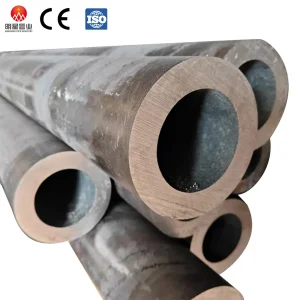
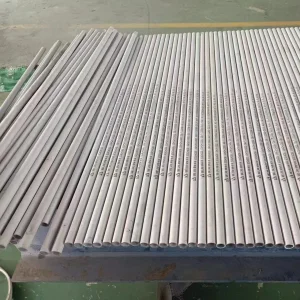
A Historical Perspective of Engineering Excellence from Guangzhou Flowtera Pipe Co., Ltd.
Guangzhou Flowtera Pipe Co., Ltd. stands at the forefront of metallurgical manufacturing as a specialized manufacturer of premium alloy steel pipes and structural stainless steel tubes. Operating in Guangzhou, a core industrial node and vital maritime logistics hub in Southern China, Flowtera integrates state-of-the-art manufacturing platforms with sophisticated logistics management to ensure absolute traceability, high reliability, and prompt delivery schedules for international operators.
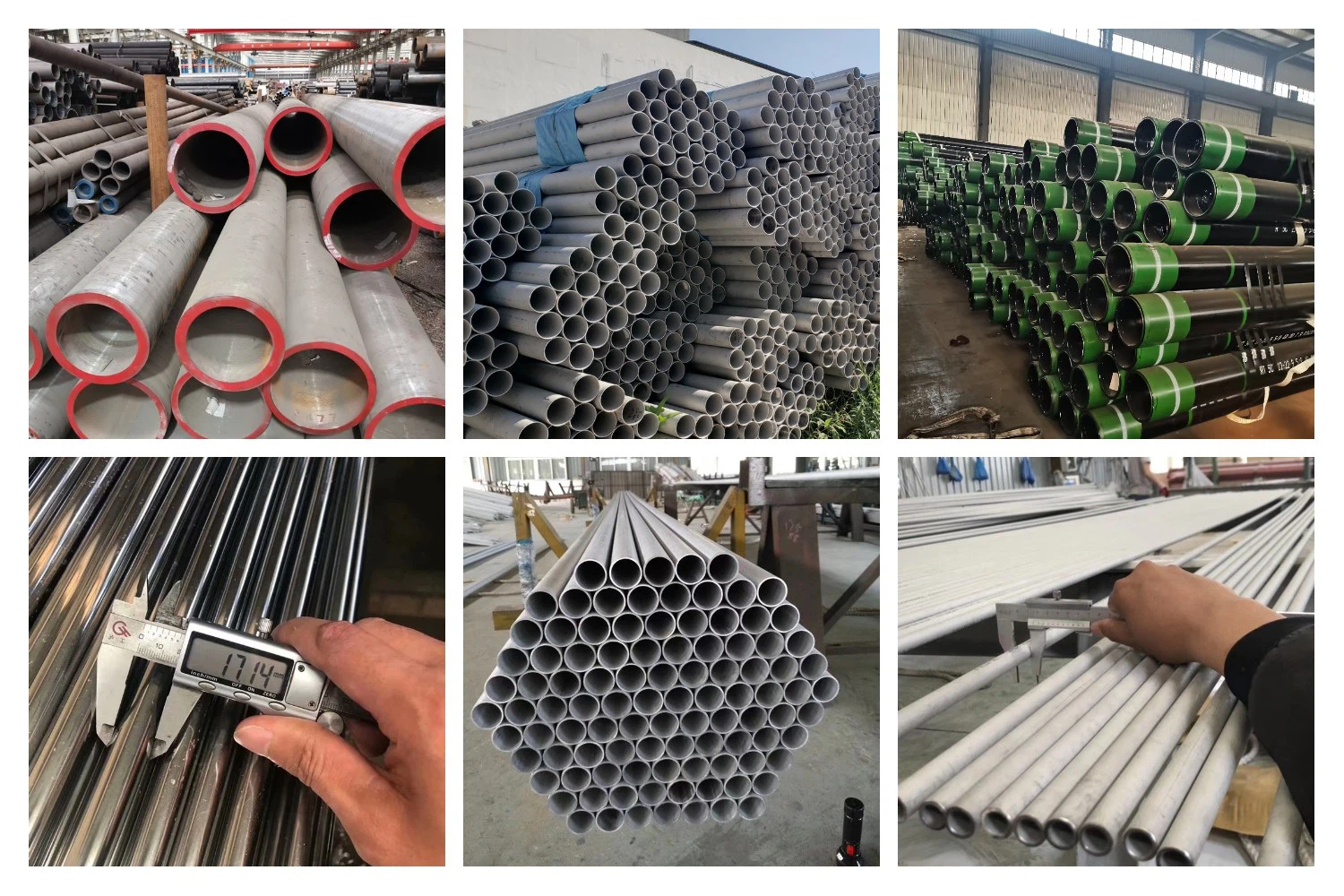
Established in 2011, Flowtera initially launched as a regional vendor supplying structural steel components, precision carbon tubing, and fundamental pipes for construction and onshore infrastructure. By 2015, recognizing the growing demand for deepwater exploration and severe chemical processing capabilities, the company expanded strategically into high-performance alloy steel and corrosion-resistant alloy (CRA) stainless steel pipelines. This pivot involved multi-million dollar investments in modern production lines dedicated to both seamless and welded technologies.
In 2019, Flowtera achieved a milestone in global compliance by integrating advanced precision testing apparatus and automated inspection mechanisms. Our operations incorporate non-destructive examination (NDE) methods including ultrasonic testing (UT), radiographic inspection, and electromagnetic testing, ensuring conformance with complex technical guidelines for offshore deepwater conduits, high-pressure processing lines, and nuclear energy systems. Today, our extensive product portfolio serves high-integrity sectors including subsea hydrocarbon extraction, structural marine engineering, petrochemical refining, and deep-sea mineral harvesting.
Overcoming Deep-Sea Mechanics, External Pressures, and Corrosive Fluids
Modern subsea pipeline technology represents one of the most demanding disciplines in ocean engineering. Pipelines installed at depths exceeding 2,000 meters must withstand combinations of severe hydrostatic pressure, dynamic seabed currents, high thermal gradients, and aggressive internal fluids containing corrosive elements. To address these challenges, Flowtera provides engineering solutions designed for optimal performance under harsh conditions.
Our heavy-wall carbon steel and high-yield alloy pipes are engineered with strict tolerances on ovality and wall thickness eccentricity, ensuring reliable resistance against external pressure-induced collapse in deep waters.
Designed for fields rich in hydrogen sulfide (H2S), our sour service lines utilize specialized chemistries to prevent hydrogen-induced cracking (HIC) and stress corrosion cracking (SCC).
Our high-integrity Duplex (UNS S31803 / S32205) and Super Duplex (UNS S32750) seamless products prevent paraffin deposition and resist erosion-corrosion from high-velocity multiphase flows.
In addition to main transportation lines, offshore setups utilize key auxiliary components. These include riser systems that connect the seafloor to the surface platform, subsea manifold piping systems, and umbilical tubing that supplies hydraulic control and chemicals. Flowtera provides a range of products to meet these demands, including high-precision ASME SB-166 Inconel 625/600/601 seamless pipes and ASTM A249 316 super duplex tubing to support consistent system performance.
Navigating Strict Offshore Compliance Frameworks
The procurement of offshore piping is governed by demanding international specifications. Global engineering procurement contractors (EPCs) operate under standards designed to minimize catastrophic failures at sea. Subsea lines are manufactured to comply with regulatory standards, including:
SEO Technical Insight: When selecting a manufacturer for subsea operations, verifying the product's PREN (Pitting Resistance Equivalent Number) is critical. For instance, super duplex tubing must maintain a minimum PREN of 40 ($PREN = \%Cr + 3.3(\%Mo + 0.5\%W) + 16\%N$) to withstand pitting corrosion in warm, chloride-rich marine environments.
From a global supply chain standpoint, China has transitioned from a high-volume steel manufacturer to a producer of specialized metallurgy. By combining refined processes, localized logistics, and raw material access, Chinese manufacturers like Flowtera offer competitive options for high-performance subsea tubing. This enables global operators to balance project economics with engineering safety standards.
Advanced Microstructures for Marine Environments
Subsea engineering requires materials tailored to specific environmental threats. The table below outlines the primary materials utilized by Flowtera for marine applications:
| Steel Grade / Category | Standard Specs | Key Metallurgical Characteristics | Target Subsea Application |
|---|---|---|---|
| Super Duplex Stainless Steel | UNS S32750 / ASTM A249 | Mixed 50/50 austenite-ferrite structure. High yield strength (>550 MPa), PREN ≥ 40, resistance to stress corrosion cracking. | Deepwater subsea risers, flowlines, umbilical tubing, manifold piping. |
| Nickel Alloy (Inconel 625) | ASME SB-166 / UNS N06625 | Nickel-chromium-molybdenum matrix, solid-solution strengthened. Outstanding corrosion resistance under high temperatures. | Nuclear reactor components, subsea manifold hubs, high-temperature sour gas wells. |
| Low-Temp Seamless Steel | ASTM A333 Grade 6 | Fine-grain killed carbon steel structure. Superior impact toughness at subzero temperatures down to -45°C. | Arctic marine pipelines, subsea terminals, shallow-water coastal landfalls. |
| High-Yield Alloy (4130 / 4140) | AISI 4130, 4140 / Cold Drawn Seamless | Chromium-molybdenum alloy steel. Hardened via quenching & tempering to achieve high structural toughness. | Honed cylinders, downhole tool components, subsea structural casings. |
Flowtera's production processes focus on microstructure refinement. During the production of duplex and super duplex tubes, precise solution annealing temperatures are maintained between 1040°C and 1120°C, followed by rapid water quenching. This process balances the ferrite and austenite phases, helping prevent the formation of detrimental intermetallic phases (such as sigma phase) which can compromise corrosion resistance and impact toughness.
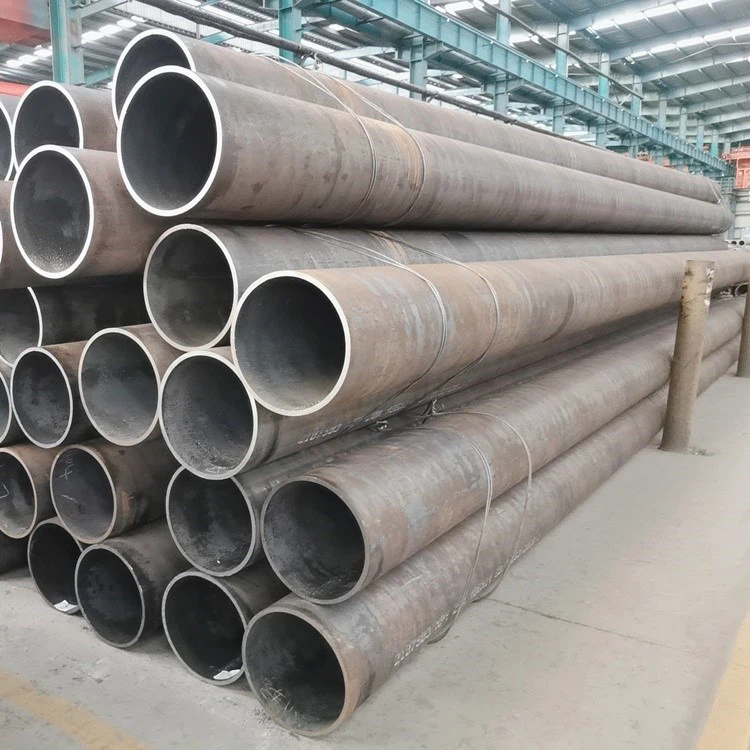
Tailoring Pipelines to Regional Offshore Fields
Marine pipeline designs are customized to address the unique geological and environmental conditions of specific offshore regions:
The South China Sea is characterized by water depths exceeding 1,500 meters, complex underwater canyons, and seismic activity. Pipelines here require thick-walled seamless steel pipes (such as ASTM A106/A53 Grade B or high-yield carbon grades) with tight dimensional tolerances. These specifications help prevent collapse from hydrostatic pressure during horizontal directional drilling (HDD) and J-lay offshore installation.
Offshore fields in the Persian Gulf often feature high concentrations of hydrogen sulfide (H2S) and carbon dioxide (CO2). To resist corrosion, projects utilize either solid Super Duplex pipes or carbon steel pipes lined internally with a corrosion-resistant alloy (CRA cladding), such as Inconel 625 or 316L stainless steel.
North Sea operations often involve fluid extraction temperatures exceeding 130°C under high wellhead pressures. For these environments, systems rely on heat-resistant alloy steel piping, including ASTM A213 T9, to maintain mechanical strength and resist creep over decades of service.
Traceable Engineering and International Logistics Integration
To support critical applications, Flowtera maintains a rigorous Quality Assurance (QA) program. Every production run undergoes a defined inspection sequence to verify material integrity and compliance with design standards:
Flowtera's logistics facility in Guangzhou enables direct transport to local terminals, facilitating efficient sea and air shipping. We provide customized packaging options, including seaworthy wood cases, steel end caps, and anti-rust coatings, to protect products from corrosion during transport and long-term storage.
Technical Inquiries & Engineering Considerations Answered by Flowtera Experts
Seamless pipes are manufactured without a weld seam, eliminating the risk of longitudinal weld defects. This makes them suitable for high-pressure applications, high-depth external hydrostatic environments, and dynamic risers. Welded tubes (such as longitudinal submerged arc welded, LSAW) are typically used for larger diameter main trunklines in shallow water or onshore logistics pipelines where installation stresses are lower and cost-efficiency is a priority.
To prevent HIC in environments containing wet H2S, we specify clean steel formulations with low sulfur content (≤ 0.002%) and low phosphorus content. We also use calcium treatment for shape control of non-metallic inclusions, followed by strict heat treatment protocols to eliminate hard martensitic microstructures that are vulnerable to cracking.
Subsea lines must maintain tight dimensional control to prevent installation issues during welding and J-lay/S-lay operations. We follow API 5L PSL2 and DNV-OS-F101 standards, which mandate strict limits on outer diameter (OD) deviation, wall thickness eccentricity (typically within ±5%), and out-of-roundness (ovality ≤ 1% to 1.5% depending on depth).
Duplex stainless steels (like 2205 and 2507) offer roughly double the yield strength of standard austenitic grades like 316L. This high mechanical strength allows for thinner wall designs, reducing overall pipeline weight. Additionally, their high chromium, molybdenum, and nitrogen content provides superior resistance to pitting and stress corrosion cracking in high-salinity seawater.
Precision Welded and Seamless Solutions for Global Supply Chains
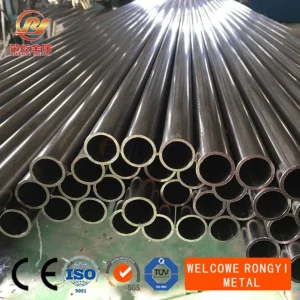
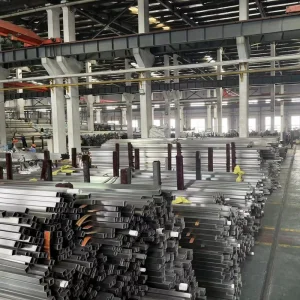
 Flowtera Pipe